





What's Happening?
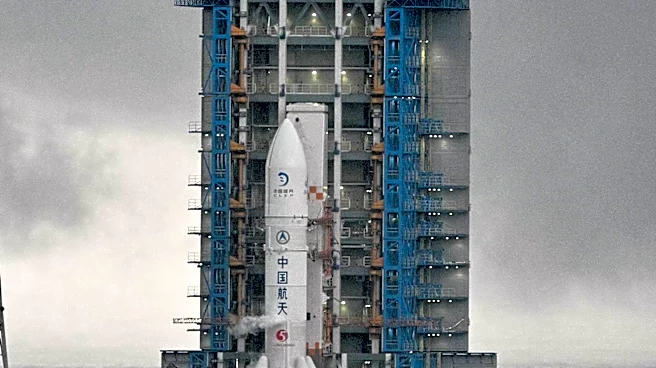
A Chinese Long March 7A rocket, intended to launch the Zhongxing-4B satellite, exploded shortly after liftoff from the Wenchang Space Launch Site. The failure occurred just 85 seconds into the flight, marking a rare setback for China's space program.
The incident was confirmed by state news agency Xinhua, which reported an anomaly during the flight. The Long March 7A is a key component of China's satellite delivery capabilities, designed by the China Academy of Launch Vehicle Technology. This failure comes amid China's broader ambitions to become a leader in space exploration by 2050.
Why It's Important?
The failure of the Long March 7A rocket highlights the challenges faced by China's space program as it competes with other global powers, particularly the United States. This incident may impact China's timeline and strategy for achieving its space exploration goals, including advancements in reusable rocket technology and satellite deployment. The setback could also influence international perceptions of China's technological capabilities and reliability in space endeavors. As space exploration becomes increasingly competitive, such failures underscore the complexities and risks involved in advancing space technology.
What's Next?
Following the rocket failure, the launch of the Zhuque-3, a reusable rocket developed by a private Chinese company, has been delayed. This delay indicates potential adjustments in China's space launch schedule and strategy. The investigation into the Long March 7A failure will likely inform future launches and technological improvements. Stakeholders in China's space program may need to reassess their approaches to ensure the success of upcoming missions and maintain progress towards their long-term objectives.