



What's Happening?
Representative Tim Kennedy (D-NY) has introduced the bipartisan Stormwater Treatment, Optimization, Resilience, and Management with Academic Technological Expertise and Research (STORMWATER) Act. This legislation aims to reauthorize federal grant programs
that support stormwater innovation, technical assistance, and flood mitigation. The existing grant programs were set to expire in September 2026, and this bill proposes to extend them through fiscal year 2031. The Act specifically seeks to establish a fifth Center of Excellence focused on the Great Lakes region, ensuring dedicated expertise for its unique stormwater and water-quality challenges. It also reauthorizes $5 million annually from fiscal years 2027 through 2031 to support and maintain five Centers of Excellence, and an additional $10 million annually for competitive Stormwater Control Infrastructure Project grants to address communities’ stormwater infrastructure needs. The Great Lakes Commission has commended Rep. Kennedy for introducing this Act, highlighting its importance for communities facing increased flooding and pollution.
Why It's Important?
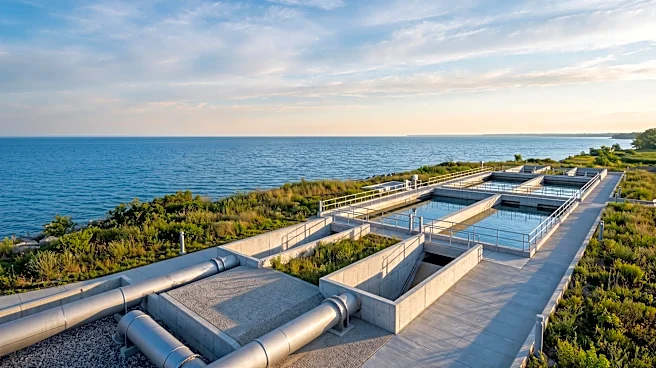
The STORMWATER Act is crucial for strengthening water infrastructure across the U.S., particularly in the Great Lakes region, which holds 20 percent of the world's surface freshwater supply. By reauthorizing and expanding federal grant programs, the legislation provides essential resources for communities to manage stormwater runoff, reduce flooding, and protect waterways from pollution. Stormwater runoff, caused by rain or melted snow flowing over hard surfaces, can overwhelm infrastructure, lead to flooding, and carry pollutants like oil, debris, fertilizers, and chemicals into local streams and lakes. This has significant environmental and economic consequences. The bill's focus on the Great Lakes through a dedicated Center of Excellence acknowledges the region's unique vulnerabilities and aims to safeguard public health and water quality. Investing in stronger stormwater infrastructure can protect homes and businesses, reduce pollution, and preserve the economic vitality of these critical water bodies for future generations.
What's Next?
The STORMWATER Act will proceed through the legislative process in Congress. If passed, it will ensure the continuity of vital federal grant programs for stormwater management and flood mitigation until fiscal year 2031. Communities across the Great Lakes region and beyond can anticipate continued access to funding and technical assistance to address their stormwater infrastructure needs. The establishment of a Great Lakes-focused Center of Excellence will likely lead to more targeted research and solutions for the region's specific challenges. Stakeholders, including local governments, environmental organizations, and engineering firms, will likely prepare to apply for the reauthorized grants and participate in the programs to implement long-term infrastructure improvements and pollution control measures. The bill's bipartisan support, as evidenced by Rep. Mike Kelly's co-sponsorship, suggests a potential for successful passage.
Beyond the Headlines
Beyond its immediate impact on infrastructure and environmental protection, the STORMWATER Act highlights a growing national recognition of the interconnectedness of climate resilience, public health, and economic stability. The increasing frequency of extreme weather events and their impact on aging infrastructure underscores the necessity of proactive legislative measures. This bill represents a shift towards a more integrated approach to water management, moving beyond traditional flood control to encompass broader ecological and community well-being. The emphasis on Centers of Excellence also points to the importance of scientific research and technological innovation in addressing complex environmental challenges. Furthermore, the bipartisan nature of the bill suggests a potential for broader consensus on infrastructure investment and environmental stewardship, which could pave the way for future collaborative efforts in addressing climate-related issues.