

What's Happening?
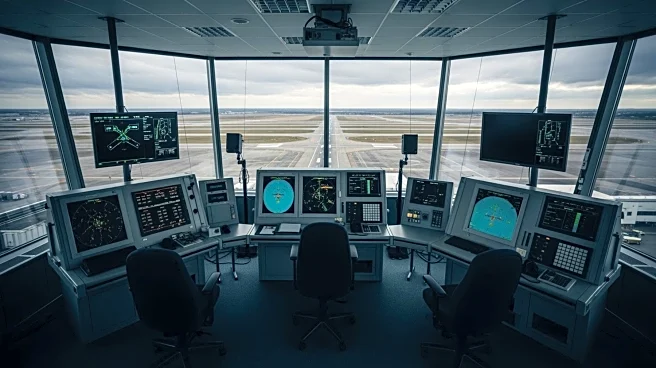
The Federal Aviation Administration (FAA) is facing a significant staffing crisis as it heads into the 2026 peak travel season with a shortfall of approximately 3,000 certified air traffic controllers. The agency currently employs around 10,800 to 11,000
controllers, falling short of its operational target of 14,000. This gap has persisted for over a decade, exacerbated by a 2011 hiring freeze, waves of retirements, and a lengthy training process for new controllers. The FAA Academy in Oklahoma City, the sole pipeline for new controllers, cannot process candidates quickly enough to outpace attrition. High-traffic facilities like New York TRACON and those serving major airports such as Chicago O'Hare and Los Angeles International are operating below optimal staffing levels, leading to mandatory overtime and increased fatigue among controllers.
Why It's Important?
The staffing shortage at the FAA has significant implications for the U.S. aviation industry and travelers. Understaffed facilities can lead to increased delays and disruptions, particularly during peak travel periods. Airlines have already cited air traffic control staffing as a factor in delays, impacting their operations and customer satisfaction. The shortage also raises safety concerns, as fatigued controllers may be more prone to errors. The situation has drawn attention from lawmakers, with some proposing legislation to establish minimum staffing levels at high-traffic facilities. The FAA's ability to address this issue is crucial for maintaining the efficiency and safety of the national airspace system.
What's Next?
The FAA has outlined a multi-year hiring plan to close the controller gap by the end of the decade, contingent on sustained congressional support and successful retention of candidates through the certification process. However, the agency faces a compounding challenge as it must manage a wave of retirements among controllers hired in the late 1980s and 1990s. The effectiveness of the FAA's efforts will be closely monitored by safety advocates and the airline industry, especially as the summer travel season approaches. Legislative actions, such as the proposed Senate bill to establish staffing floors, could also influence the agency's future workforce policies.