






What's Happening?
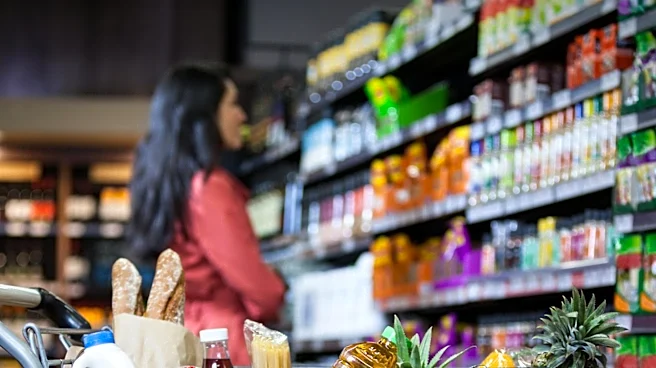
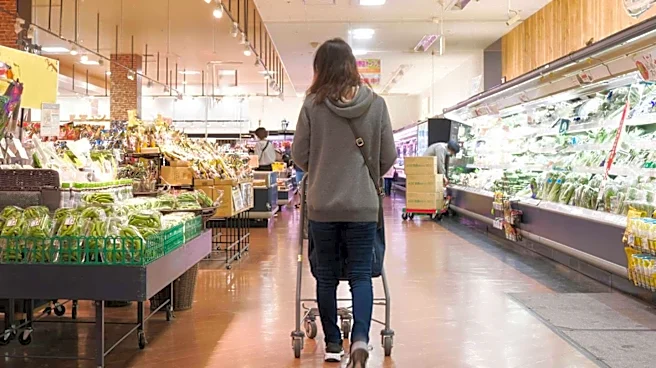
Americans are adjusting their grocery shopping habits in response to the largest price increase in 50 years. The average price of groceries in U.S. cities has risen by 33% since 2019, driven by factors such as the pandemic, supply chain disruptions, and geopolitical
tensions. Residents in urban areas with above-average food price inflation are adopting strategies like couponing, brand switching, and reducing discretionary purchases. The ongoing conflict in the Middle East is further accelerating food price inflation, making affordability a key issue in upcoming elections.
Why It's Important?
The significant rise in grocery prices is impacting household budgets, particularly for lower-income families who spend a larger portion of their income on food. This inflationary pressure is reshaping consumer behavior, with many Americans seeking cost-saving measures and relying more on food banks. The situation highlights the broader economic challenges faced by consumers, as other costs like housing and utilities also rise. The issue of food affordability is becoming increasingly central in political discourse, influencing voter priorities.
Beyond the Headlines
The persistent rise in food prices underscores the vulnerability of supply chains to global disruptions and the interconnectedness of geopolitical events and domestic economic conditions. The reliance on imported goods in regions like Hawaii exacerbates the impact of global price fluctuations. This situation may prompt discussions on food security and the need for more resilient local supply chains.