






What's Happening?
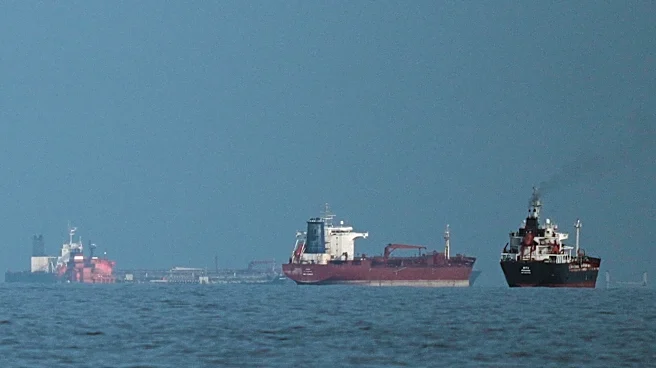
Renewed geopolitical tensions between the United States and Iran have led to significant market volatility. Diplomatic discussions between the two nations have broken down, prompting the U.S. to signal plans for a blockade on Iranian ports. This development
has caused oil prices to surge by more than 7% due to concerns over supply disruptions. The instability has also affected global markets, with investors closely monitoring the situation. The tensions have highlighted the vulnerability of markets to geopolitical events, particularly those involving major oil-producing nations.
Why It's Important?
The escalation in U.S.-Iran tensions and the resulting market volatility underscore the interconnectedness of global markets and the impact of geopolitical events on economic stability. The surge in oil prices can have widespread implications, potentially leading to increased costs for businesses and consumers. This situation may also influence investor behavior, as they seek to mitigate risks associated with geopolitical uncertainties. The potential blockade of Iranian ports could further strain international relations and disrupt global trade, affecting industries reliant on stable oil supplies.
What's Next?
As the situation develops, stakeholders will be watching for any diplomatic efforts to de-escalate tensions. The U.S. government's next steps, including the implementation of the proposed blockade, will be critical in determining the future trajectory of oil prices and market stability. Businesses and investors may need to adjust their strategies to account for potential disruptions. Additionally, international bodies and allies may become involved in mediating the conflict to prevent further economic fallout.