








What's Happening?
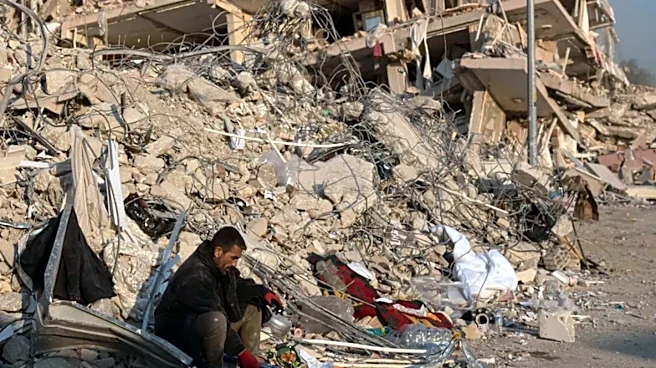
The death toll from the two earthquakes that struck Venezuela on June 24 has increased to 4,333, according to National Assembly President Jorge Rodriguez. The number of injured remains at 16,740, with 6,462 people rescued and approximately 17,000 left
homeless. Interim Venezuelan President Delcy Rodriguez has called for the lifting of international sanctions to aid recovery efforts, highlighting that blocked resources could be used for reconstruction. Israel has extended its humanitarian mission in Venezuela by two weeks, with the IDF providing guidance on debris management and developing a national reconstruction plan. The Israeli delegation, consisting of 30 members, has been mapping and categorizing damaged buildings to determine which can be salvaged.
Why It's Important?
The earthquakes have exacerbated Venezuela's existing challenges, including economic sanctions that have restricted access to resources needed for recovery. The call for lifting sanctions underscores the tension between humanitarian needs and geopolitical strategies. The involvement of international aid, particularly from Israel, highlights the global dimension of disaster response and the importance of international cooperation. The situation in Venezuela serves as a reminder of the potential humanitarian impact of political and economic policies, as well as the need for rapid and effective disaster response mechanisms.
What's Next?
The Venezuelan government is set to begin distributing housing to those affected by the earthquakes next week. The continuation of Israel's humanitarian mission will focus on implementing the national reconstruction plan. The international community may face increased pressure to reconsider sanctions in light of the humanitarian crisis. The effectiveness of the reconstruction efforts will depend on the availability of resources and international support. The situation may also influence future diplomatic relations between Venezuela and other countries involved in the sanctions.