
What's Happening?
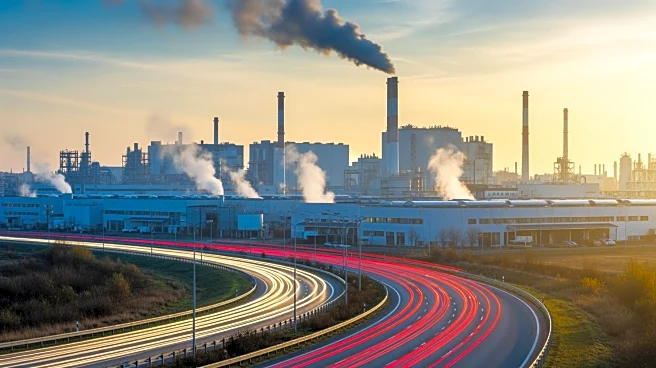
Bac Ninh, a city in Vietnam, has transformed from rice fields to a bustling factory zone due to a surge in foreign investment, particularly from Chinese companies. This shift was accelerated by President
Trump's tariff hikes, which prompted factories to relocate from China to Vietnam. The city has become a hub for electronics manufacturing, with companies like Samsung establishing significant operations. However, rising labor costs, worker shortages, and inadequate infrastructure are challenging Vietnam's rapid industrial growth. The country is striving to move up the value chain by expanding into high-tech manufacturing and clean energy, while also building infrastructure to support this growth.
Why It's Important?
Vietnam's economic transformation is significant as it positions itself as a potential 'tiger economy' in Asia, similar to South Korea and Taiwan. The shift from low-cost assembly to high-value manufacturing could enhance Vietnam's economic standing and reduce its reliance on the U.S. market by diversifying export destinations. However, the rising costs and competition from neighboring countries like Indonesia and the Philippines pose challenges. The outcome of Vietnam's efforts will impact global supply chains, especially as companies seek alternatives to China amid ongoing trade tensions.
What's Next?
Vietnam is expected to continue its push towards high-value manufacturing, with plans to expand infrastructure and offer incentives to attract foreign investment. The country aims to reduce its dependence on the U.S. by exploring new markets. The upcoming National Party Congress will be crucial in determining Vietnam's political and economic direction. Meanwhile, competition from other Southeast Asian countries will likely intensify as they also seek to attract foreign investment.