



What's Happening?
The European Environment Agency (EEA) has released a briefing titled 'Building climate-resilient agriculture in Europe: an economic perspective,' which analyzes 51 farm-level case studies across Europe. The report demonstrates that climate-resilient agriculture (CRA)
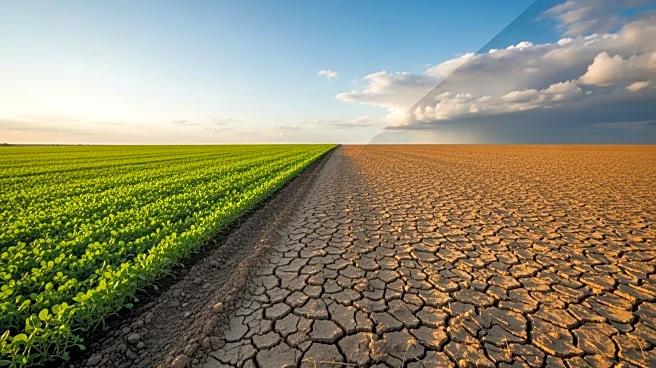
practices can stabilize farmers' incomes while ensuring food security and ecosystem health. The briefing highlights the economic imperative of CRA, emphasizing the reduction of dependence on costly inputs and operations. By strengthening soil-water functions and reducing reliance on volatile purchased inputs, CRA can lower exposure to climate shocks and support stable farm performance. The report underscores the need for an economic shift towards CRA in Europe, as rising temperatures and shifting rainfall patterns disrupt agricultural production across the continent.
Why It's Important?
The significance of the EEA's report lies in its potential to influence agricultural policy and practices across Europe. As climate change intensifies, European farms face increasing pressure from climate extremes and economic fragility. CRA offers a strategic approach to mitigate these challenges by enhancing resilience and reducing vulnerability to climate shocks. By adopting CRA practices, farmers can achieve more stable economic returns and contribute to the long-term viability of Europe's food system. The report's findings may encourage policymakers to prioritize CRA in agricultural reforms, aligning economic stability with environmental sustainability.