


What's Happening?
The National Football League (NFL) has formally requested that the Department of Homeland Security (DHS) remove a social media video that juxtaposes former NFL star Brian Dawkins's aggressive tackles with the agency's immigration enforcement efforts.
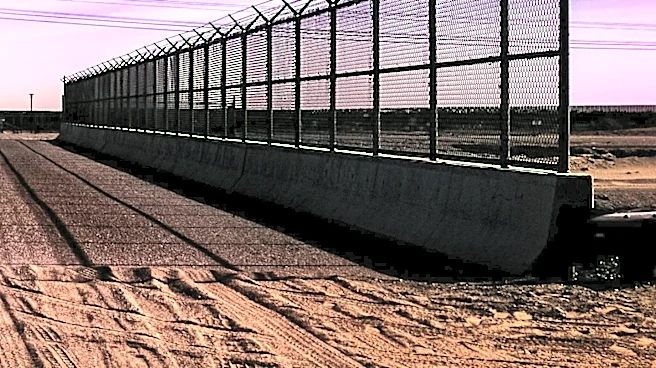
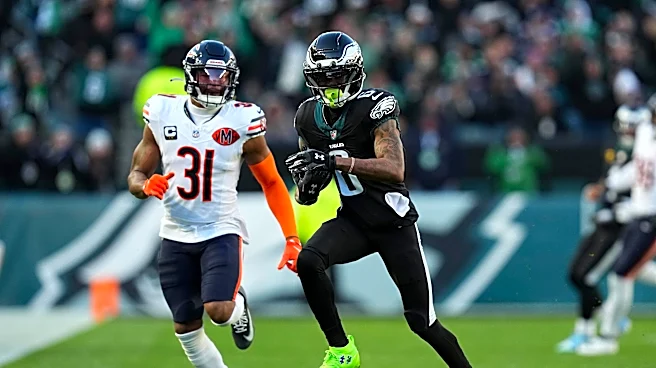
The video, posted by DHS on Sunday, features Dawkins's pregame chant, 'The time has come,' followed by a montage of his impactful hits during his playing career. The DHS post included the caption 'Our time has come,' in response to claims of a 'huge migrant caravan' approaching the U.S. southern border. NFL spokesman Brian McCarthy confirmed the league's request for the video's removal. Brian Dawkins, a Hall of Famer known for his physical play with the Philadelphia Eagles and Denver Broncos, stated that he did not grant permission for his image to be used by DHS. This incident is not isolated, as DHS previously used IndyCar driver Pato O'Ward's image in a 2025 social media post promoting an immigration detention center, which also drew criticism.
Why It's Important?
This incident highlights the contentious intersection of sports, national security, and political messaging, particularly concerning immigration. The NFL's request for the video's removal underscores the league's desire to maintain its brand neutrality and avoid association with politically charged issues. For athletes like Brian Dawkins, the unauthorized use of their image for political purposes can be damaging to their personal brand and public perception. The DHS's use of sports analogies and imagery to convey its enforcement stance on immigration can be seen as an attempt to normalize or popularize its policies, but it risks alienating segments of the public and drawing criticism from organizations that prefer to remain apolitical. This situation also raises questions about intellectual property rights and the ethical use of public figures' images in government communications, especially when those figures have not given their consent.
What's Next?
The NFL will likely continue to monitor the situation and may pursue further action if DHS does not comply with its request to remove the video. This incident could prompt both the NFL and individual athletes to review and potentially strengthen their policies regarding the use of their images and intellectual property by external entities, particularly government agencies. DHS, on the other hand, may face public scrutiny and criticism for its communication strategy, potentially leading to a reevaluation of how it uses social media and popular culture references to convey its messages. This event could also spark broader discussions about the appropriate boundaries between government communication, sports, and entertainment, and the potential for such cross-overs to be perceived as propaganda or inappropriate endorsements. Future instances of government agencies using celebrity images without consent could lead to legal challenges.
Beyond the Headlines
Beyond the immediate controversy, this event touches upon deeper implications regarding the politicization of cultural icons and institutions. When government agencies appropriate popular sports figures or imagery for political messaging, it can erode public trust in both the government and the institutions being used. It also raises ethical concerns about the exploitation of public figures for purposes they do not endorse. The incident reflects a broader trend where political narratives increasingly permeate various aspects of public life, including sports, which traditionally serve as a unifying force. This can lead to increased polarization and a blurring of lines between entertainment and political discourse. The unauthorized use of images also highlights the ongoing debate about digital rights and consent in the age of pervasive social media, where content can be easily repurposed and disseminated without the original creator's or subject's permission.