



What's Happening?
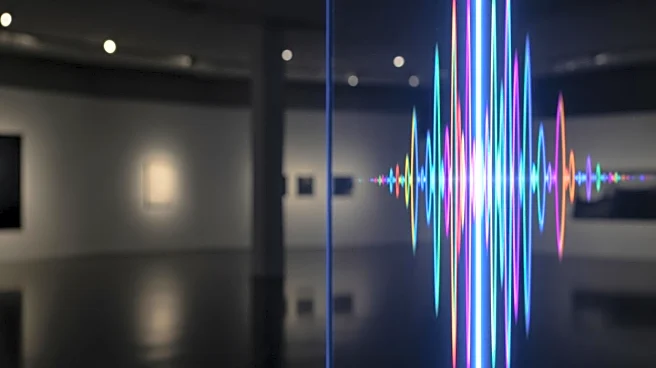
An engineering artist known as Rootkid has created an innovative installation called Spectrum Slit, which visualizes invisible WiFi signals as light. This artistic project uses a software-defined radio to capture radio frequencies from common wireless
bands, such as those used by WiFi and Bluetooth, and translates them into a dynamic light display. The installation is mounted on a U-shaped steel frame and features 64 luminous filaments that light up based on the intensity of the radio signals detected. This project not only serves as an art piece but also offers a unique perspective on the constant electromagnetic activity in our environments.
Why It's Important?
The Spectrum Slit installation is significant as it bridges the gap between technology and art, offering a tangible representation of the invisible wireless signals that permeate our daily lives. This project highlights the pervasive nature of technology and its impact on our environments, encouraging viewers to consider the unseen aspects of modern connectivity. For tech enthusiasts and artists, it presents a novel way to engage with and visualize data, potentially inspiring new approaches to integrating technology into artistic expressions. Additionally, it underscores the potential for creative applications of technology in everyday settings, such as incorporating real-time data visualization into home or office environments.
Beyond the Headlines
Beyond its immediate visual appeal, the Spectrum Slit installation raises questions about the omnipresence of wireless technology and its implications for privacy and health. By making the invisible visible, it prompts discussions about the electromagnetic fields generated by our devices and their potential effects. The project also suggests possibilities for future innovations in data visualization, where real-time information could be integrated into aesthetic designs, enhancing both functionality and artistic value. This could lead to new trends in interior design and personal technology setups, where data-driven art becomes a standard feature.