
What's Happening?
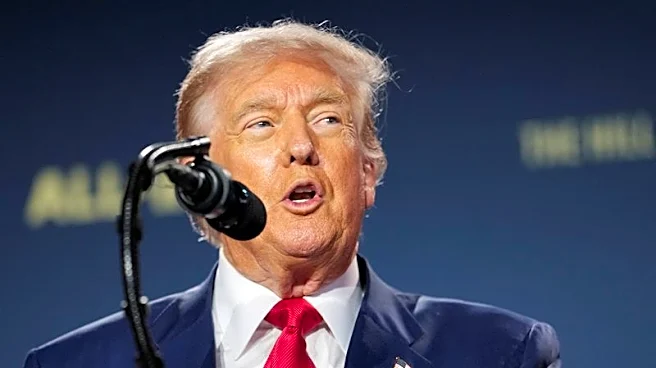
President Trump and Senator Bernie Sanders are engaging in discussions about public ownership in artificial intelligence (AI) companies. This conversation follows a proposal by Sanders for the public to take
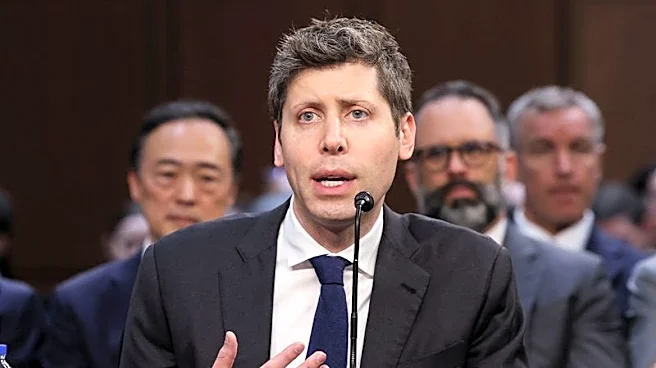
a 50% ownership stake in AI companies like OpenAI, aiming to create a public wealth fund from the profits of these companies. OpenAI CEO Sam Altman has shown interest in the idea of public equity in AI, although he does not support Sanders' 50% threshold. The discussions highlight a rare convergence of ideas between Trump, a Republican, and Sanders, a democratic socialist, as both see potential benefits for the American public in AI's growth. Trump has expressed interest in a partnership where the public can benefit from AI's success, and plans to meet with AI executives at the White House to explore this further.
Why It's Important?
The discussions between Trump, Sanders, and Altman underscore the increasing political and public scrutiny of AI's role in society. As AI technology rapidly advances, there are growing concerns about its impact on jobs, privacy, and economic inequality. The idea of public ownership in AI companies could address some of these concerns by ensuring that the financial benefits of AI are shared more broadly. This approach could also mitigate public backlash against AI, which is becoming more pronounced as data centers and AI projects face opposition over environmental and economic impacts. The involvement of high-profile political figures like Trump and Sanders indicates that AI regulation and public ownership could become significant issues in U.S. policy debates.
What's Next?
The next steps involve further discussions and potential policy developments. President Trump plans to host AI executives at the White House to discuss public ownership and other regulatory measures. Meanwhile, Congress is working on a bipartisan framework for AI regulation, which could establish a federal approach to managing AI's growth and impact. These discussions and legislative efforts will likely shape the future of AI regulation in the U.S., balancing innovation with public interest and safety. Stakeholders, including tech companies, policymakers, and the public, will continue to engage in debates over the best ways to harness AI's potential while addressing its challenges.