






What's Happening?
The Emma S. Barrientos Mexican American Cultural Center (MACC) in Austin, Texas, is set to reopen on June 6 after being closed for over six years due to the COVID-19 pandemic and a long-planned renovation. The center, which initially closed in March 2020,
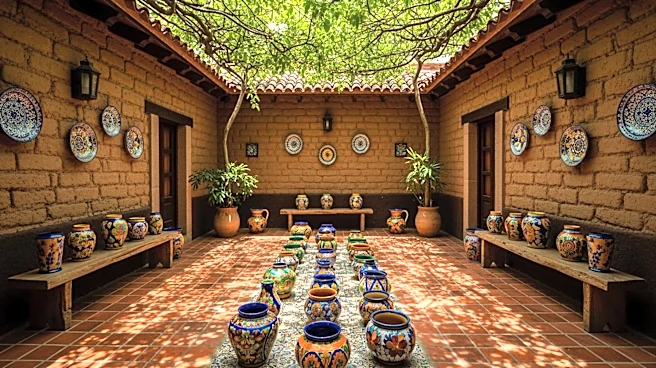
underwent a significant expansion known as Phase 2, adding 19,000 square feet of programmable space. The renovation was delayed due to increased material costs and labor shortages during the pandemic. The MACC, originally designed by architect Teodoro González de León, now features extended wings, a transformed inner plaza, and new facilities such as classrooms, a kitchen, and a vegetable garden. The center has historically served as a cultural hub for the Mexican American community in Austin, offering programs and events that celebrate and preserve Latino culture.
Why It's Important?
The reopening of the MACC is significant for the Mexican American community in Austin, as it provides a dedicated space for cultural expression and community engagement. The center's expansion reflects a broader commitment to preserving and promoting Latino heritage in a rapidly gentrifying city. The MACC's reopening also highlights the challenges faced by cultural institutions during the pandemic, including financial constraints and construction delays. As a cultural landmark, the MACC plays a crucial role in fostering intergenerational learning and community cohesion, offering a safe space for cultural celebration and education. The center's reopening is a testament to the resilience and resourcefulness of the Latino community in Austin.
What's Next?
With the reopening of the MACC, the center plans to resume its full range of cultural programs and events, including art exhibitions, dance performances, and educational workshops. The center will continue to partner with local organizations to provide community services, such as legal clinics and know-your-rights workshops. As the MACC reopens, it will face the challenge of engaging a community that has been dispersed due to gentrification and rising living costs in Austin. The center aims to attract visitors from across the city and beyond, reinforcing its role as a cultural beacon for the Latino community.