



What's Happening?
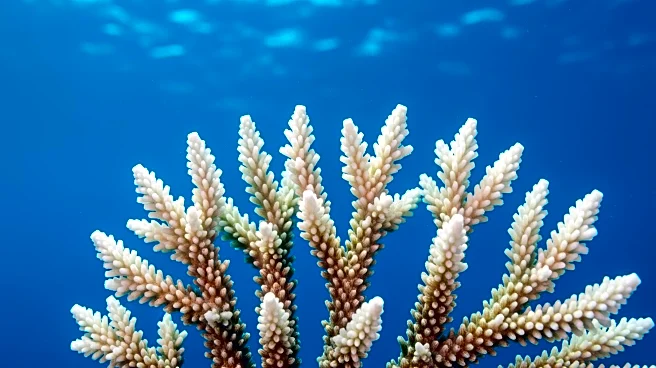
Recent studies have highlighted the severe damage inflicted on coral reefs during the Third Global Coral Bleaching Event, which spanned from 2014 to 2017. The event was characterized by record heat stress, leading to widespread coral bleaching and mortality.
Researchers utilized satellite data to monitor sea surface temperatures and heat stress metrics, revealing that the bleaching sensitivity was highest during 2015-2016. The study compiled data from various field surveys, documenting the spatial extent and severity of bleaching and mortality worldwide. The findings indicate a strong correlation between accumulated heat stress and coral bleaching, with significant variations observed across different ocean basins and bleaching years.
Why It's Important?
The damage to coral reefs has profound implications for marine ecosystems and biodiversity. Coral reefs are vital for supporting marine life, protecting coastlines, and providing resources for millions of people. The increased frequency and severity of bleaching events threaten the survival of coral species and the ecosystems they support. This situation underscores the urgent need for global efforts to mitigate climate change and protect coral reefs from further degradation. The study's findings can inform conservation strategies and policy decisions aimed at preserving these critical habitats.
What's Next?
Future research and monitoring efforts are essential to understand the long-term impacts of coral bleaching and to develop effective conservation strategies. Scientists and policymakers must collaborate to address the root causes of climate change and implement measures to reduce heat stress on coral reefs. Additionally, there is a need to explore adaptive strategies that can enhance the resilience of coral reefs to environmental stressors.
Beyond the Headlines
The study highlights the potential for coral reefs to adapt to changing conditions through selective mortality and changes in the genetic makeup of endosymbiotic communities. This adaptation could offer a glimmer of hope for the future of coral reefs, but it requires careful management and protection to ensure their survival. The ethical and cultural significance of coral reefs also calls for increased public awareness and engagement in conservation efforts.