




What's Happening?
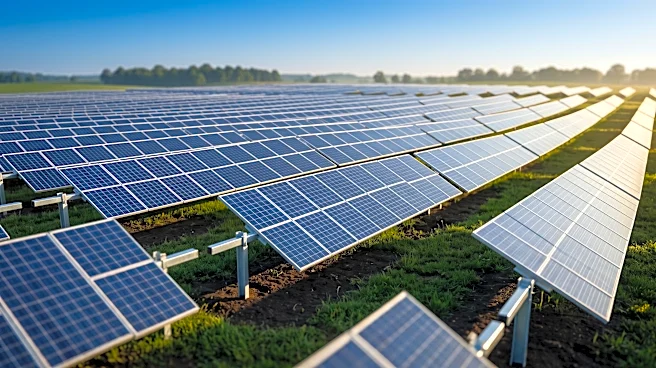
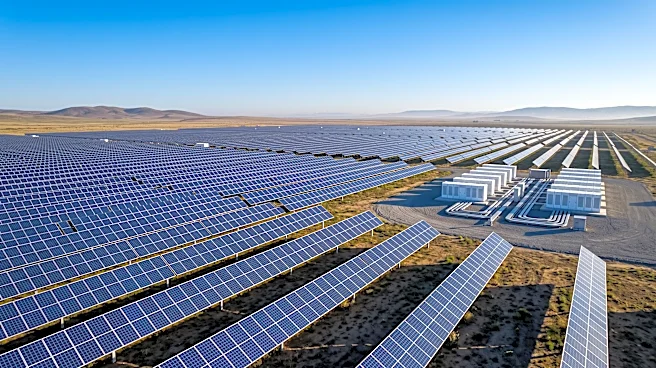
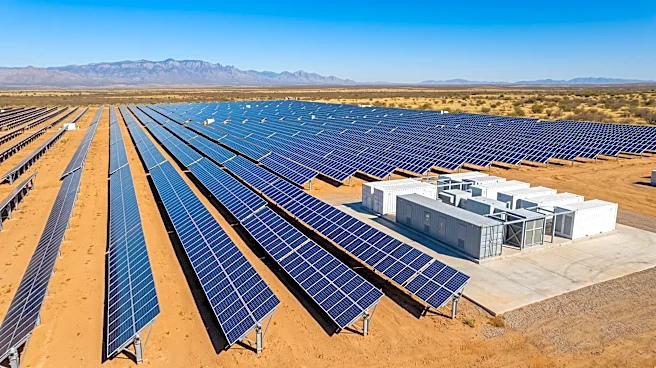
A proposed utility-scale solar project in the Nevada desert, the Purple Sage Energy Center, is currently undergoing its final review. This project, which combines large-scale photovoltaics with integrated lithium-ion battery storage, is planned for 4,534
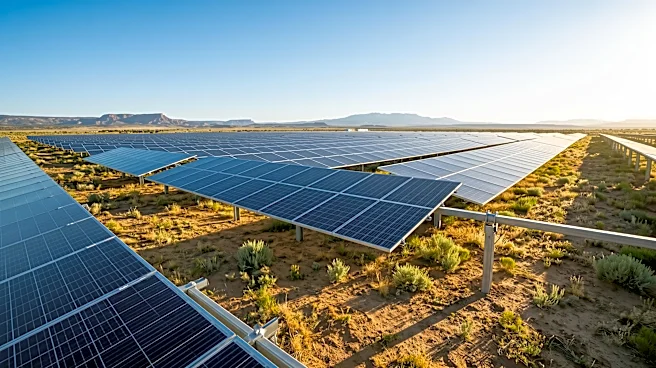
acres of public land managed by the Bureau of Land Management (BLM) in Clark County, approximately 12 miles south of Pahrump. The region offers ideal conditions for solar energy development due to high solar irradiance and expansive flat terrain. However, the Pahrump Valley is also a crucial migration corridor for big-game species like desert bighorn sheep and elk, and the project's construction and security fencing pose potential ecological impacts. The BLM has issued its Final Environmental Impact Statement, moving the project closer to a Record of Decision, with developers expected to implement mitigation efforts to safeguard sensitive desert wildlife.
Why It's Important?
This project highlights the critical balance between advancing U.S. clean energy goals and protecting sensitive ecosystems. The U.S. aims for a zero-carbon electricity sector by 2035 and net-zero emissions economy-wide by 2050, necessitating rapid growth in renewable energy capacity. Nevada, with its abundant solar resources, is a key player in this transition. However, the potential disruption to wildlife corridors and habitats, particularly for species like the Mojave desert tortoise, raises significant environmental concerns. The need for developers to implement targeted mitigation efforts underscores the importance of sustainable public land management and responsible renewable energy development. The outcome of this review will set a precedent for future large-scale solar projects in ecologically sensitive areas across the American Southwest, influencing how the nation balances its energy needs with conservation efforts.
What's Next?
Following the public review and protest resolution phase, the Purple Sage Energy Center project will move towards development. The BLM's Record of Decision will be a crucial next step, outlining the final approved plan and any mandatory mitigation measures. Developers are expected to implement strategies such as reducing the facility's footprint to avoid high-density burrows and fossil beds, adjusting fence boundaries to preserve migration corridors, and utilizing pre-construction habitat relocation protocols. The success of these mitigation efforts will be closely monitored by environmental groups and regulatory bodies. The project's progression will also inform future policy decisions regarding the siting and environmental impact assessments of renewable energy infrastructure on public lands, potentially leading to more stringent guidelines for balancing energy development with wildlife conservation.
Beyond the Headlines
The Purple Sage solar project exemplifies a broader national challenge: how to achieve ambitious decarbonization targets without inadvertently causing significant environmental damage. This situation brings to light the ethical dilemma of 'green' development, where the pursuit of clean energy can sometimes conflict with biodiversity conservation. The project's focus on mitigation strategies, such as reducing the footprint and adjusting fence lines, reflects an evolving understanding of ecological responsibility within the renewable energy sector. This case could trigger deeper discussions about the true cost of clean energy, prompting a re-evaluation of land use policies for large-scale infrastructure projects. It also underscores the importance of interdisciplinary approaches, combining ecological science, engineering, and policy-making, to ensure that the transition to a carbon-free economy is truly sustainable and holistic, considering both climate and biodiversity crises.