






What's Happening?
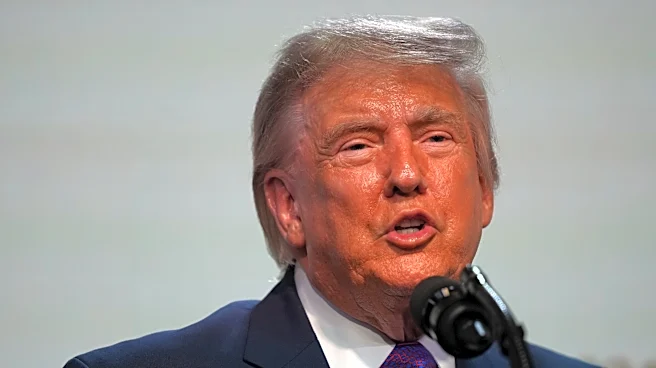
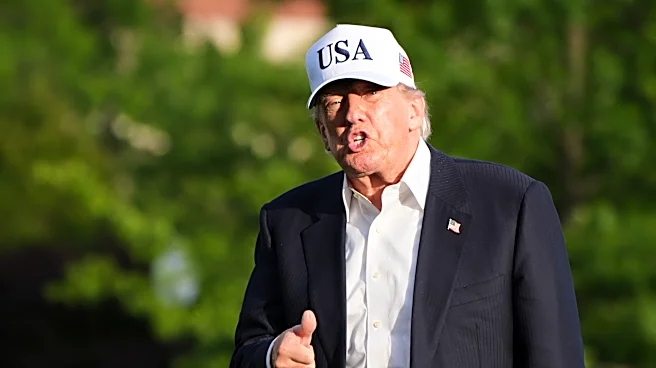
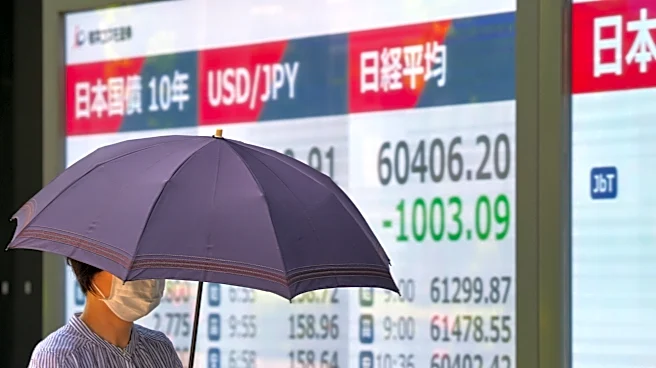
President Trump announced a postponement of a planned military strike on Iran, following requests from leaders in Saudi Arabia, the UAE, and Qatar. This decision comes amid significant global market volatility, with a sharp sell-off in bond markets and a dip
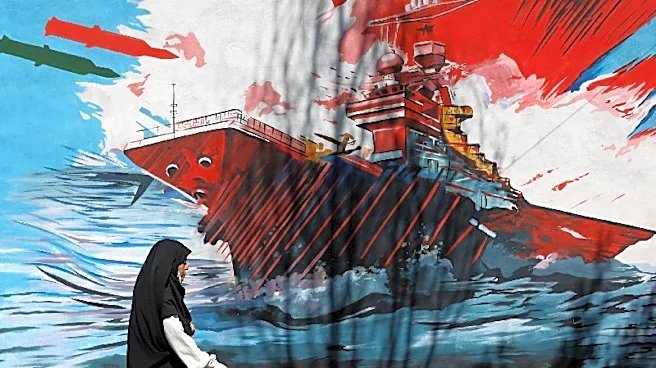
in major U.S. stock benchmarks. The 10-year U.S. Treasury yield has climbed to its highest level in a year, reflecting heightened inflation fears. Concurrently, oil prices have fallen slightly, but concerns over a prolonged energy crunch persist, particularly with the blockade of the Strait of Hormuz by Iran. Analysts warn of potential European oil shortages as inventories deplete, which could have significant implications for global supply chains and prices.
Why It's Important?
The postponement of military action against Iran by President Trump has significant geopolitical and economic implications. The decision temporarily alleviates immediate military tensions in the Middle East, which could have further destabilized global oil markets. However, the ongoing blockade of the Strait of Hormuz by Iran continues to pose a threat to global energy supplies, particularly for Europe. The rise in U.S. Treasury yields indicates investor concerns over inflation, which could lead to higher borrowing costs and impact economic growth. The situation underscores the interconnectedness of geopolitical events and global markets, highlighting the potential for significant economic disruptions.
What's Next?
Investors and policymakers will closely monitor developments in the Middle East and their impact on global energy markets. The U.S. Federal Reserve, under the leadership of newly appointed Chair Kevin Warsh, will face pressure to address inflation concerns while balancing economic growth. The potential for further geopolitical tensions remains, with Russian leader Vladimir Putin scheduled to visit Beijing, following President Trump's recent trip to China. The global community will watch for any diplomatic efforts to resolve the blockade of the Strait of Hormuz and stabilize energy markets.