







What's Happening?
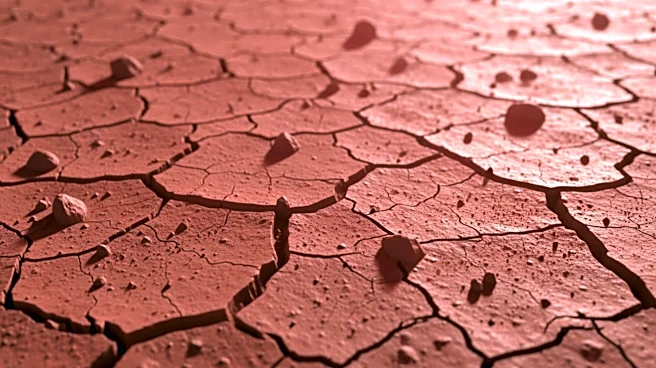
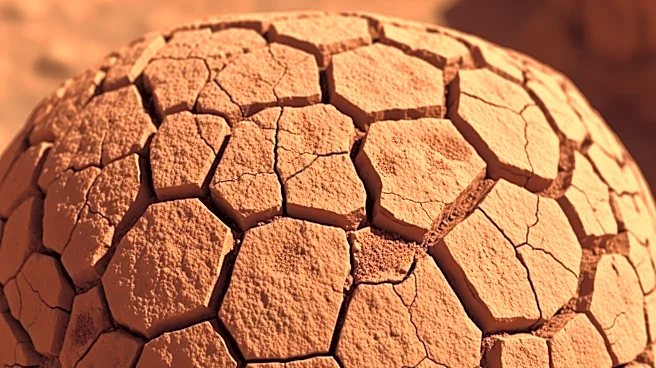
NASA's Curiosity rover has been actively exploring the Martian surface, capturing detailed images of the polygonal sulfate unit after leaving the boxwork terrain. The rover's recent activities included a successful drive over the southernmost contact
of the boxwork terrain, allowing scientists to study changes across this geological boundary. The rover's instruments, including Mastcam and MAHLI, have been used to gather chemical and textural data from the bedrock and surrounding areas. The environmental team has also been monitoring atmospheric conditions, such as opacity and aerosol scattering, using Navcam and Mastcam. These observations are part of a broader effort to understand the geological and atmospheric dynamics of Mars.
Why It's Important?
The data collected by Curiosity is crucial for understanding the geological history of Mars, particularly the transition between different terrain types. By analyzing the chemical composition and textures of the Martian surface, scientists can infer past environmental conditions and potential habitability. The rover's findings contribute to the broader goals of Mars exploration, including the search for signs of past life and the assessment of resources for future human missions. The ongoing study of atmospheric conditions also aids in preparing for future missions by providing insights into weather patterns and potential hazards.
What's Next?
Curiosity's mission will continue to focus on exploring the sulfate unit and capturing more detailed images and data. The rover's team plans to conduct further analyses of the bedrock and surrounding areas to compare with previous findings. These efforts will help refine our understanding of Mars' geological history and guide future exploration strategies. The environmental monitoring will also persist, providing valuable data for modeling Martian weather and climate.