


What's Happening?
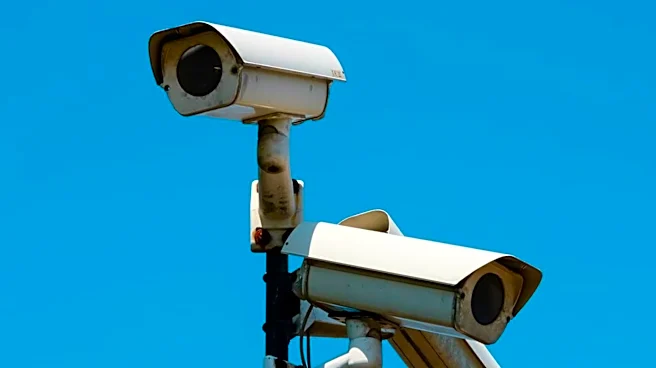
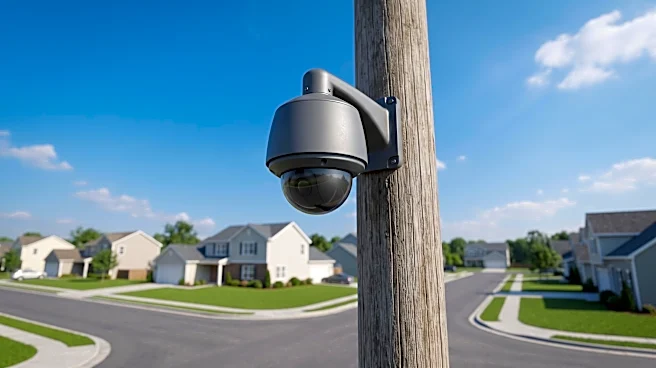
Reps. Thomas Massie (R-Ky.) and Eric Burlison (R-Mo.) have introduced the 'Flock-Off Act' in Congress, aiming to prohibit federal funding for Flock surveillance cameras. This legislative effort comes amidst a growing national debate regarding the balance
between public safety and individual privacy. Cosponsor Rep. Ro Khanna (D-Calif.) has voiced strong opposition to the technology on the House floor, emphasizing concerns about the potential for a surveillance state in America. The debate centers on the use of AI-powered license-plate readers by Flock Safety, which proponents argue are crucial tools for law enforcement in identifying suspects and solving crimes, while opponents fear an expansion of surveillance that could lead to privacy abuses, including the tracking and deportation of undocumented immigrants by agencies like Immigration and Customs Enforcement (ICE). Several Bay Area cities have grappled with these issues, with some cutting ties with Flock Safety and others, like San Jose, Oakland, and Richmond, expanding their contracts. San Francisco's Police Department recently revealed that out-of-state and federal agencies have accessed data from the city's 400 Flock cameras hundreds of times, reportedly in violation of California law.
Why It's Important?
The introduction of the 'Flock-Off Act' highlights a significant national policy conflict over the deployment and funding of surveillance technology. This legislation could have far-reaching implications for how federal resources are allocated for law enforcement tools and could set a precedent for privacy protections in the digital age. For civil liberties advocates and privacy-conscious citizens, the bill represents a crucial step in curbing what they perceive as an encroaching surveillance state. Conversely, law enforcement agencies and proponents of the technology may view such a ban as hindering their ability to combat crime effectively. The debate also underscores the tension between local governance and federal oversight, as cities across the U.S. make independent decisions on Flock contracts while federal lawmakers seek to impose national standards. The reported violations of California law by the San Francisco Police Department further complicate the issue, raising questions about accountability and the enforcement of existing privacy safeguards. The outcome of this legislative push will likely influence future policy decisions regarding AI-powered surveillance and data privacy across the country.
What's Next?
The 'Flock-Off Act' will proceed through the legislative process in Congress, where it will likely undergo committee review and potential floor votes. The bill's progression will depend on bipartisan support and the ability of its sponsors to garner sufficient votes. Stakeholders, including civil liberties organizations, law enforcement associations, and technology companies like Flock Safety, are expected to lobby intensely for or against the legislation. Local governments currently utilizing Flock cameras will closely monitor the federal debate, as a ban on federal funding could impact their ability to maintain or expand their surveillance programs. The ongoing discussions in cities like San Francisco, where the renewal of Flock Safety's contract is pending, will also be influenced by the national conversation. Furthermore, the legal implications of data access by federal agencies, as seen in San Francisco, may lead to further investigations, policy changes at the state level, or even legal challenges, potentially shaping the future regulatory landscape for surveillance technologies.
Beyond the Headlines
The 'Flock-Off Act' delves into the deeper societal implications of pervasive surveillance technology, touching upon fundamental questions of trust, civil liberties, and the evolving nature of privacy in a technologically advanced world. Beyond the immediate concerns of crime fighting and privacy, the debate raises ethical considerations about algorithmic bias, the potential for misuse of data, and the erosion of anonymity in public spaces. The concept of a 'surveillance state,' as articulated by Rep. Khanna, evokes concerns about government overreach and the potential for such technologies to disproportionately affect marginalized communities. The discussion also highlights the challenge of regulating rapidly advancing AI technologies, which often outpace existing legal frameworks. The outcome of this legislative effort could influence public perception of technology's role in society, potentially fostering either greater acceptance of surveillance for security or a stronger demand for robust privacy protections. This legislative initiative is not merely about funding; it's about defining the boundaries of privacy and security in the 21st century.