





What's Happening?
Afghan women are actively resisting Taliban mandates by establishing and operating clandestine schools, underground beauty salons, and participating in sports, despite the significant risks of arrest and punishment. Since the Taliban's return to power
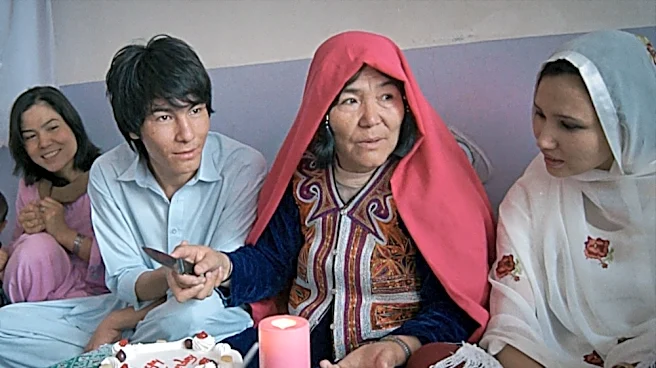
in August 2021, women and girls have faced severe limitations on their education, employment, and public life. Girls are prohibited from schooling beyond primary levels, and women are banned from parks, gyms, and beauty salons, alongside strict dress codes and employment restrictions. In Kabul, some women have opened secret salons, like a 40-year-old former salon worker who reopened her business after a raid, now employing seven young women. Another woman, a former national football player, coaches young boys in secret. Additionally, a 20-year-old woman and her sister run an underground school for about 30 students, teaching various subjects to girls and boys who attend at staggered times to avoid detection. These initiatives provide vital income and educational opportunities, though they operate under constant threat from authorities.
Why It's Important?
These acts of defiance are crucial for preserving women's rights and autonomy in Afghanistan, where the Taliban's policies aim to systematically erase women from public life. The secret schools offer a lifeline for girls' education, which is otherwise severely restricted, ensuring that a generation does not lose access to fundamental learning. The underground businesses provide essential income for families, many of whom have lost their primary earners due to economic collapse and restrictions on women's employment. These efforts also represent a form of psychological resistance, allowing women to maintain a sense of purpose and community in an oppressive environment. The risks involved highlight the extreme conditions under which Afghan women are striving for basic freedoms and human dignity, underscoring the profound impact of the Taliban's rule on half the population and the resilience required to counter it.
What's Next?
The future of these defiant efforts remains precarious, as they operate under the constant threat of discovery and severe repercussions from the Taliban. Women involved in these activities face potential arrest, imprisonment, and further restrictions. Despite the risks, the continued operation of these secret networks suggests a deep-seated determination to resist oppression. International attention and support, though difficult to channel directly, could play a role in highlighting these struggles and potentially influencing future policies, though direct intervention is unlikely. The women involved express a desire for change and hope for a future where they can openly pursue education and work. However, without a significant shift in the Taliban's stance or external pressure, these underground activities will likely continue to be the primary means for Afghan women to assert their rights and maintain their livelihoods.
Beyond the Headlines
The clandestine activities of Afghan women reveal a deeper societal struggle against authoritarian control and gender-based oppression. These acts are not merely about individual survival but represent a collective assertion of identity and human rights. The establishment of secret schools, for instance, challenges the Taliban's ideological control over education and knowledge dissemination, fostering critical thinking and preserving cultural heritage against attempts to impose a narrow worldview. The underground economy, driven by women, also highlights the economic desperation and ingenuity born out of necessity, creating informal networks that circumvent official bans. This resistance movement, though decentralized and often hidden, signifies a profound cultural and ethical battle for the soul of Afghanistan, demonstrating that even under extreme duress, the spirit of defiance and the pursuit of fundamental freedoms persist.