








What's Happening?
The ongoing conflict in Ukraine has heightened concerns about nuclear safety, particularly in light of the 40th anniversary of the Chernobyl disaster. United Nations experts have warned that the war has severe consequences for nuclear safety and security
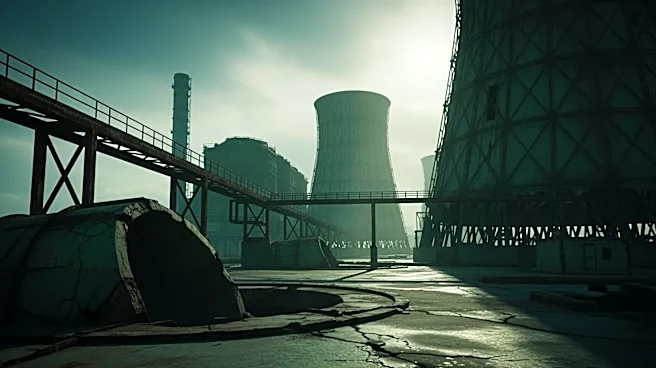
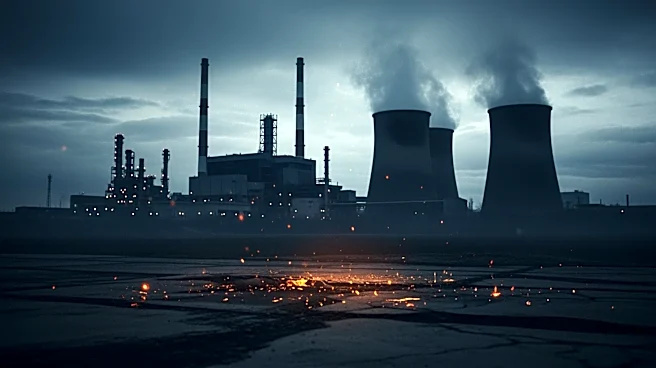
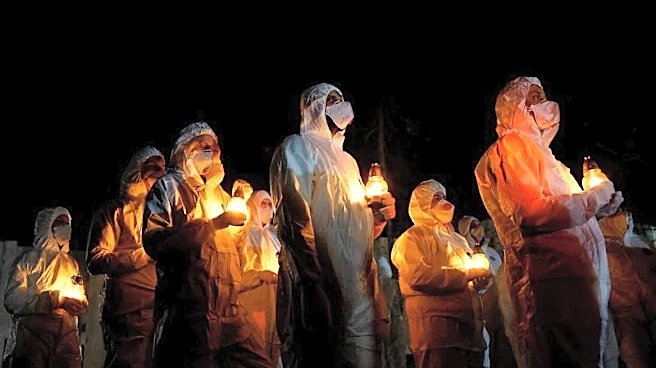
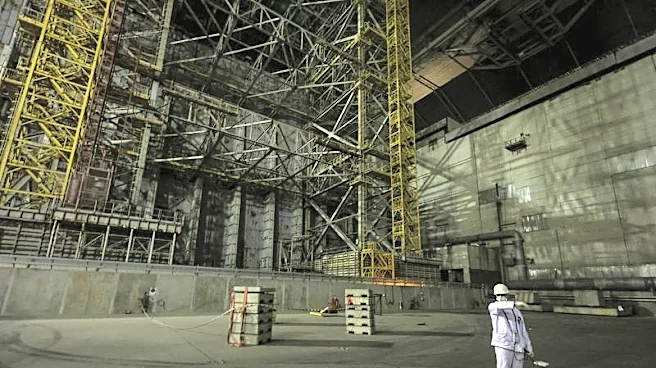
in Ukraine, posing threats not only to the country but also to Europe. The Chernobyl site, which suffered a catastrophic nuclear accident in 1986, remains a focal point of concern. The war has placed nuclear power plants on the front line, with one major plant under Russian control and others facing persistent attacks. The Chernobyl disaster, caused by a failed safety test, resulted in widespread radioactive contamination, affecting regions as far as Scotland. The incident has fueled anti-nuclear movements and investment in renewable energy. Despite international pressure, the last reactor at Chernobyl continued to operate until 2000. The current conflict has exacerbated fears of another nuclear disaster, with the International Atomic Energy Agency noting damage to protective structures at Chernobyl due to Russian attacks.
Why It's Important?
The situation underscores the vulnerability of nuclear facilities in conflict zones and the potential for catastrophic consequences. The war in Ukraine has disrupted assumptions about nuclear safety, highlighting the risks of military actions near nuclear sites. The damage to Chernobyl's protective structures could lead to increased radiation exposure, posing a threat to public health and the environment. The reliance on nuclear power in Ukraine, exacerbated by attacks on other energy infrastructure, further complicates the situation. The conflict has also reignited global debates about the safety and ethics of nuclear power, with potential implications for energy policies and international relations. The ongoing threat to nuclear safety in Ukraine could have far-reaching effects on European security and environmental stability.
What's Next?
Efforts to repair and secure nuclear facilities in Ukraine are critical to preventing further damage and potential disasters. The international community may need to increase support for Ukraine's nuclear safety measures and infrastructure repairs. Diplomatic efforts to de-escalate the conflict and protect nuclear sites are essential to mitigate risks. The situation may prompt a reevaluation of nuclear energy policies and safety protocols globally, influencing future energy strategies and international cooperation on nuclear safety. Continued monitoring and assessment by international agencies will be crucial in managing the risks associated with the conflict.