




What's Happening?
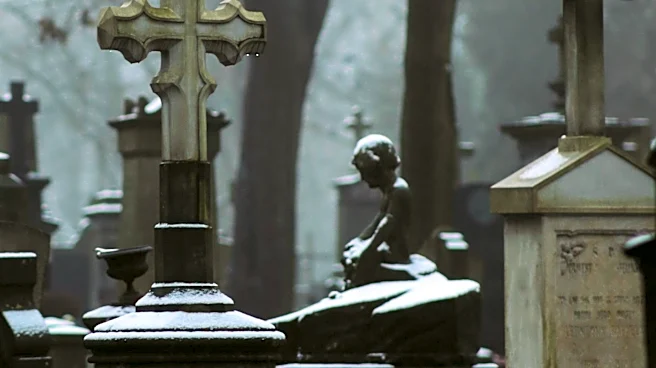
Woodlawn Cemetery in Detroit, Michigan, is recognized as the final resting place for numerous influential figures from various sectors, including civil rights, automotive industry, music, and politics. Located on Woodward Avenue, the cemetery houses the graves
of Rosa Parks, the 'Mother of the Civil Rights Movement,' and Motown music legends such as Aretha Franklin, James Jamerson, Esther Gordy Edwards, and members of The Four Tops and The Temptations. Automotive magnates like Edsel and Eleanor Ford, and the Dodge brothers, John and Horace, are also interred there. Additionally, politicians such as former Detroit Mayor and Michigan Governor Hazen Pingree, and U.S. Senator James J. Couzens, along with notable literary figures like 'The People’s Poet' Edgar A. Guest Sr., contribute to the cemetery's historical significance. The cemetery, designed by landscape architect Frank Eurich, was established in 1895 and features winding roads and a small lake, making it a significant historical landmark in metro Detroit.
Why It's Important?
The Woodlawn Cemetery serves as a crucial historical and cultural landmark, preserving the legacies of individuals who profoundly shaped American society, particularly in Detroit. The presence of civil rights icon Rosa Parks underscores its importance in the narrative of the fight for equality. The interment of Motown artists highlights Detroit's pivotal role in American music history and its global cultural impact. The automotive industry leaders buried there reflect Detroit's status as the birthplace of the modern automobile industry and its economic influence. Furthermore, the politicians and philanthropists interred at Woodlawn represent significant contributions to urban development, social reform, and civic causes, offering a tangible connection to the city's past leadership and its evolution. The cemetery acts as a repository of collective memory, allowing current and future generations to connect with the lives and achievements of these historical figures.
What's Next?
The Woodlawn Cemetery will likely continue to be a site of historical interest and cultural tourism, attracting visitors interested in American history, music, and industry. Guided tours, such as those led by Kevin Walsh, director of film, video, and television production at Lawrence Tech, will likely persist in educating the public about the notable figures buried there and their contributions. Efforts to preserve the cemetery's grounds and historical markers will be ongoing to maintain its integrity as a significant landmark. Educational initiatives, potentially including partnerships with local historical societies and academic institutions, could further enhance public understanding of the individuals interred and their impact on Detroit and the nation. The cemetery's role as a place of remembrance and reflection for families and the broader community will also continue.
Beyond the Headlines
Beyond its function as a burial ground, Woodlawn Cemetery offers a unique lens through which to understand the interconnectedness of various facets of American history—civil rights, industrial innovation, musical evolution, and political leadership. The concentration of such diverse and influential figures in one location speaks to Detroit's historical prominence as a hub of innovation, culture, and social change. The cemetery implicitly tells a story of American progress and struggle, from the fight for civil rights to the rise of mass production and the birth of new musical genres. It also highlights the philanthropic spirit of many of its residents, whose contributions extended beyond their primary professions to shape the social fabric of the city. The physical landscape of the cemetery, with its carefully designed park-like setting, also reflects changing attitudes towards death and memorialization over time.