







What's Happening?
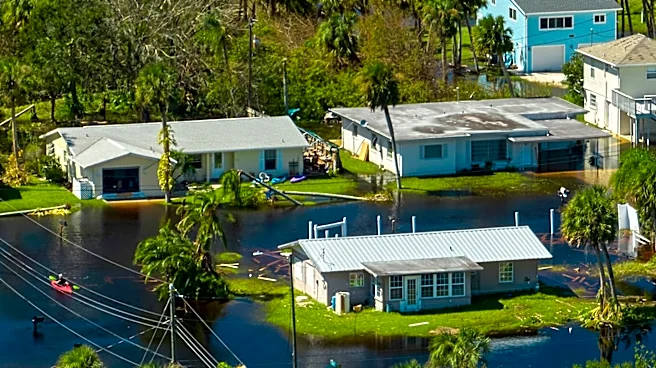
Recent data indicates a significant shift in American migration patterns, with a growing number of residents moving away from areas at high risk of flooding. According to an analysis by real estate brokerage Redfin, counties classified in the top 10%
for flood risk experienced a net loss of 63,357 residents from mid-2024 to mid-2025. This marks nearly double the outflow compared to the previous year. Conversely, counties with lower flood risks saw a net gain of nearly 70,000 residents, the largest increase since 2018. The analysis, which combines US Census Bureau data with flood-risk assessments from First Street, highlights that climate and weather risks are increasingly influencing relocation decisions. Rising insurance premiums and maintenance costs in flood-prone areas are contributing to this trend. Notably, Miami-Dade County in Florida experienced the largest net domestic outflow, losing over 72,000 residents. Despite this trend, some high-risk counties, particularly in affordable parts of Florida, Texas, and North Carolina, still recorded net inflows.
Why It's Important?
This migration trend underscores the growing impact of climate change on housing markets and relocation decisions in the United States. As insurance premiums and maintenance costs rise in flood-prone areas, affordability is becoming more closely linked with climate risk. This shift could have significant implications for real estate markets, insurance industries, and local economies in vulnerable regions. The movement away from high-risk areas may lead to decreased property values and tax revenues, affecting public services and infrastructure investments. Conversely, areas with lower flood risks may experience increased demand, potentially driving up housing costs and straining local resources. The trend also highlights the need for policymakers to address climate resilience and adaptation strategies to mitigate the economic and social impacts of climate change.
What's Next?
As climate risks continue to influence migration patterns, stakeholders such as real estate developers, insurers, and policymakers may need to adapt their strategies. Real estate markets in low-risk areas could see increased investment and development, while high-risk areas may require enhanced flood defenses and infrastructure improvements to retain residents. Insurance companies might adjust their coverage offerings and pricing models to reflect the changing risk landscape. Policymakers could focus on implementing climate adaptation measures and incentivizing sustainable development in vulnerable regions. Additionally, public awareness campaigns may be necessary to educate homeowners about climate risks and encourage informed relocation decisions.