





What's Happening?
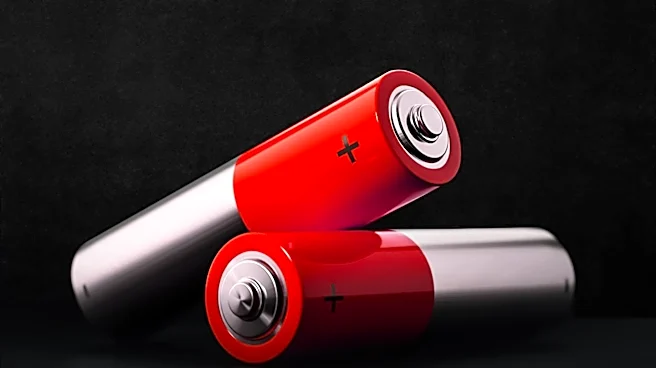
Researchers at Nanjing University have introduced an iron-mediated strategy to address structural degradation in high-energy sodium-ion battery cathodes. Sodium-ion batteries are being explored as a more abundant and cost-effective alternative to lithium-ion
systems. A key challenge in developing these batteries has been their tendency to break down quickly, particularly when oxygen atoms within the cathode are forced to participate in energy storage, a process known as lattice-oxygen redox. While this process boosts power, it causes the cathode's crystal structure to crack and degrade over deep charge cycles because oxidized oxygen rarely returns to its original state. The Nanjing University team resolved this by embedding iron ions into a custom layered cathode, creating an atomic-scale 'electron shuttle' that regulates electron transfer and stabilizes the lattice during cycling. This innovation has allowed a sodium-ion pouch cell to achieve an energy density of 206 Wh kg−1 and maintain 87.8 percent capacity retention after 100 cycles.
Why It's Important?
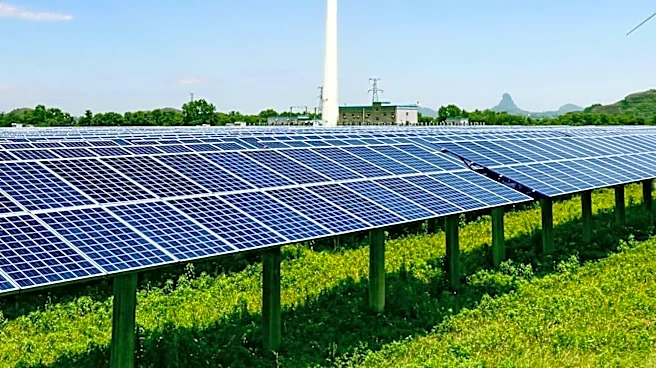
This development is significant for the future of energy storage and electric vehicles in the U.S. and globally. Lithium-ion batteries currently dominate the market, but their reliance on increasingly scarce and expensive lithium presents long-term challenges. Sodium, being vastly more abundant and cheaper, offers a compelling alternative. By improving the stability and energy density of sodium-ion batteries, this research makes them a more viable option for large-scale applications such as grid storage for renewable energy sources like wind and solar farms, where weight is less of a concern. Furthermore, replacing costly materials like cobalt or nickel with abundant iron makes these batteries more commercially attractive, potentially lowering manufacturing costs and increasing accessibility. This could accelerate the transition to sustainable energy solutions and reduce dependence on critical minerals, impacting U.S. energy independence and economic stability.
What's Next?
The next steps for this technology will likely involve further testing and scaling up the production of these iron-mediated sodium-ion cathodes. Researchers will aim to improve the energy density and cycle life even further to compete more directly with advanced lithium-ion batteries. Commercialization efforts will focus on integrating this technology into practical battery designs for various applications, including stationary energy storage systems and potentially lower-cost electric vehicles. Collaboration between academic institutions and industrial partners will be crucial to bring this innovation from the laboratory to market. Regulatory bodies and industry standards organizations may also begin to evaluate and establish guidelines for the safe and efficient deployment of sodium-ion battery technologies, paving the way for their broader adoption in the U.S. and international markets.
Beyond the Headlines
The deeper implications of this research extend beyond immediate technological advancements. The shift towards sodium-ion batteries, facilitated by innovations like the iron-mediated strategy, could significantly alter global supply chains for battery materials. Reducing reliance on lithium, cobalt, and nickel could mitigate geopolitical risks associated with their extraction and processing, as these materials are often concentrated in specific regions. This could lead to a more diversified and resilient battery supply chain, benefiting U.S. manufacturers and consumers. Environmentally, the use of more abundant and less toxic materials could also reduce the ecological footprint of battery production and disposal. Furthermore, the development of more affordable and sustainable energy storage solutions could accelerate the global energy transition, making renewable energy more accessible and reliable, thereby contributing to climate change mitigation efforts on a broader scale.