








What's Happening?
Researchers from the University of Colorado Boulder, in collaboration with other scientists, have uncovered three previously unknown species of rodent-like mammals in northern Alaska. These species, which lived more than 70 million years ago, were discovered
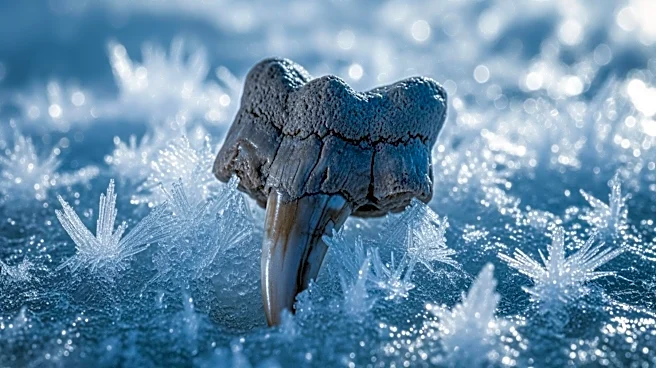
through fossil teeth found in the Prince Creek Formation. The study, published in the Proceedings of the National Academy of Sciences, reveals that these mammals, belonging to the extinct group known as multituberculates, thrived in the harsh Arctic environment, enduring months of darkness and freezing temperatures. The species, named Camurodon borealis, Qayaqgruk peregrinus, and Kaniqsiqcosmodon polaris, show significant differences in tooth shape, indicating varied diets that likely contributed to their survival.
Why It's Important?
The discovery of these ancient species provides valuable insights into the adaptability and resilience of mammals in extreme environments. The ability of these multituberculates to survive in the Arctic's challenging conditions suggests that they had evolved unique survival strategies, such as dietary specialization. This adaptability may have contributed to their longevity, as they persisted for over 100 million years, even surviving the mass extinction event that wiped out the dinosaurs. The findings also highlight the historical significance of the Arctic as a dynamic ecosystem that supported diverse life forms, challenging previous assumptions about its role in evolutionary history.
What's Next?
The research opens new avenues for understanding how ancient mammals adapted to extreme climates, which could inform current studies on how modern species might cope with climate change. Further exploration of the Prince Creek Formation and similar sites could uncover more about the migration patterns and evolutionary history of early mammals. Additionally, the study underscores the importance of preserving fossil sites, as they hold critical information about Earth's past ecosystems and the evolutionary processes that shaped them.
Beyond the Headlines
This discovery also sheds light on ancient migration patterns, as one of the species, Qayaqgruk peregrinus, is closely related to a species found in Mongolia. This suggests that there was a land corridor between Asia and North America, facilitating the movement of species across continents. Such findings challenge our understanding of native species and highlight the complex history of species migration and ecosystem development over millions of years.