







What's Happening?
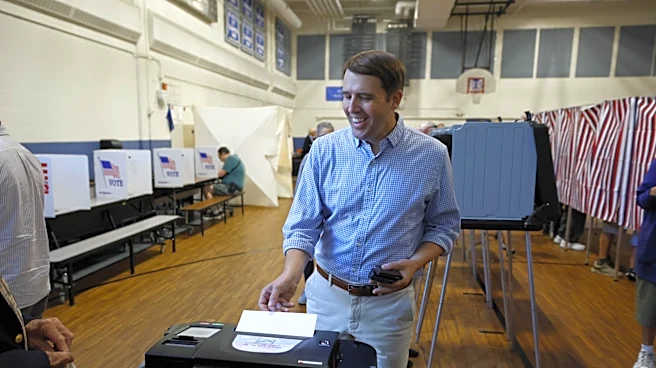
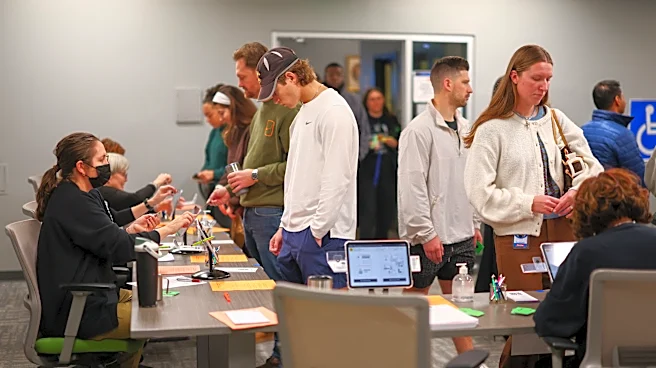
Lewiston, Maine, has become the state's largest municipality to restrict syringe service programs (SSPs) after a majority of voters passed a referendum on Tuesday. This citizen initiative reinstates a one-for-one needle exchange policy, limiting syringe service providers
to distributing no more than 20 sterile syringes per person daily. Additionally, the new restrictions prohibit mobile exchange units and require all exchange programs to operate from a single, fixed location. Over 8,200 voters supported these restrictions, while 5,700 opposed them. This outcome occurred despite a campaign against the initiative by public health experts, doctors, and advocates who cite research indicating SSPs' effectiveness in harm reduction and preventing the spread of infectious diseases. The restrictions are implemented as Penobscot County, to the north, is experiencing an active HIV outbreak, primarily affecting unhoused individuals and intravenous drug users, with 50 cases reported as of Thursday. Eryn Soule, a former city councilor who led the effort to limit SSPs, described the outcome as a 'win for Lewiston and all involved,' stating it provides a 'fair balance for public health' and that all services remain available.
Why It's Important?
The decision by Lewiston voters to restrict syringe service programs carries significant public health implications for the community and potentially sets a precedent for other municipalities in Maine. Public health experts and the Maine Department of Health and Human Services (DHHS) have consistently advocated for expanded SSPs, citing their role in preventing the spread of infectious diseases like HIV and Hepatitis C, and connecting individuals with substance use disorder to treatment. The Maine CDC Director, Dr. Puthiery Va, previously stated that limits on clean needles are not 'supported by evidenced based practice, would limit access, and increase infectious disease transmission risk.' The reintroduction of a one-for-one exchange and the ban on mobile units could hinder access to clean needles, potentially leading to increased syringe sharing and a rise in disease transmission, especially given the ongoing HIV outbreak in a neighboring county. While proponents of the restrictions, like Eryn Soule, argue for a 'fair balance,' critics, such as Democratic Rep. Scott Harriman, express concern about increased syringe litter and the broader public health consequences. This move highlights a tension between local concerns about discarded syringes and broader public health strategies.
What's Next?
The newly approved restrictions on syringe service programs in Lewiston will now be implemented, requiring providers to adhere to the one-for-one exchange limit and operate from a single location. Democratic Rep. Scott Harriman has voiced concerns about the potential for increased syringe litter and the limitations of modifying citizen-initiated legislation, suggesting efforts might be made at the state level to expand SSPs in the immediate area. This indicates a potential for continued debate and legislative action regarding syringe service programs in Maine. Earlier this year, the Maine Legislature rejected statewide proposals to limit these programs, suggesting a potential conflict between local voter initiatives and broader state-level public health policy. The impact of these restrictions on public health metrics, such as infectious disease rates and syringe litter, will likely be closely monitored. The situation in Lewiston could also influence other Maine municipalities considering similar measures, creating a patchwork of regulations across the state.
Beyond the Headlines
The Lewiston vote reflects a broader societal tension between public health strategies aimed at harm reduction and community concerns about visible social issues, such as discarded syringes. While public health organizations emphasize the evidence-based benefits of robust SSPs in reducing disease transmission and facilitating treatment entry, local communities often grapple with the immediate visual impact of syringe litter. This dynamic underscores the challenge of implementing public health policies that may be unpopular or misunderstood at the local level, even when supported by scientific consensus. The inability to easily modify citizen-initiated legislation, as highlighted by former city councilor Harriman, also raises questions about governance and the flexibility of local authorities to respond to evolving public health crises. This situation could lead to a reevaluation of how public health initiatives are communicated and integrated into community concerns, and potentially spark discussions about the mechanisms for amending citizen-led ordinances to ensure adaptability in addressing complex social and health challenges.