






What's Happening?
The southern entrance of Rome's Colosseum has been restored in a four-year project aimed at reviving the original design's scale and integrity. The renovation, led by Stefano Boeri Interiors, focused on the semicircular piazza known as the southern ambulatories,
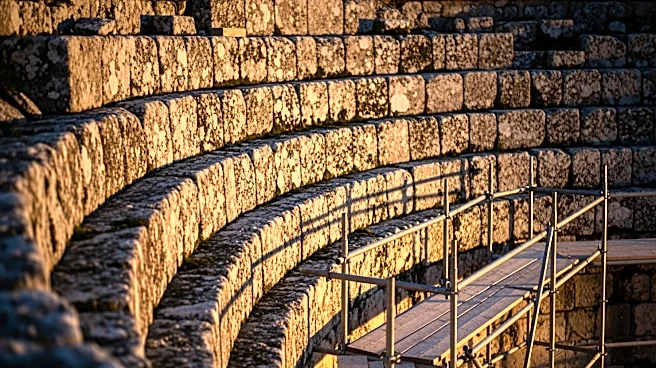
a pedestrian zone used by Roman spectators. The project involved lowering the piazza to its original height, reintroducing stairs, and relaying the flooring with travertine sourced from nearby Tivoli quarries. The renovation also included square blocks of travertine marble for seating and Roman numerals indicating seat sections. The project, partly funded by a new metro line development, follows the restoration of the Commodus Passage, an underground entrance opened to the public last year.
Why It's Important?
The restoration of the Colosseum's southern entrance is significant for both historical preservation and tourism. By reviving the original design, the project enhances the cultural and architectural heritage of one of the world's most iconic landmarks. This restoration not only preserves the Colosseum's historical integrity but also boosts tourism, providing visitors with a more authentic experience. The project also highlights the importance of sustainable tourism and cultural preservation, as it was partly funded by infrastructure development, demonstrating a commitment to integrating historical preservation with modern urban planning.
What's Next?
The completion of the southern entrance restoration may lead to increased tourism and further archaeological research opportunities. The project has already uncovered artifacts such as coins, statues, and animal bones, which could provide new insights into Roman history. Additionally, the integration of the restoration with the new metro line may improve accessibility, encouraging more visitors to explore the Colosseum and its surroundings. Future projects may focus on other parts of the Colosseum, continuing the effort to preserve and enhance this historical site.