



What's Happening?
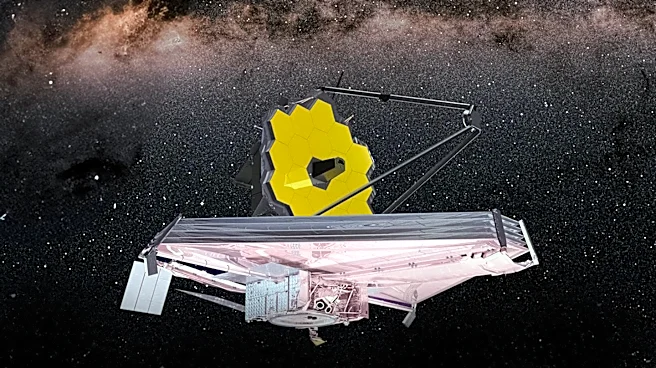
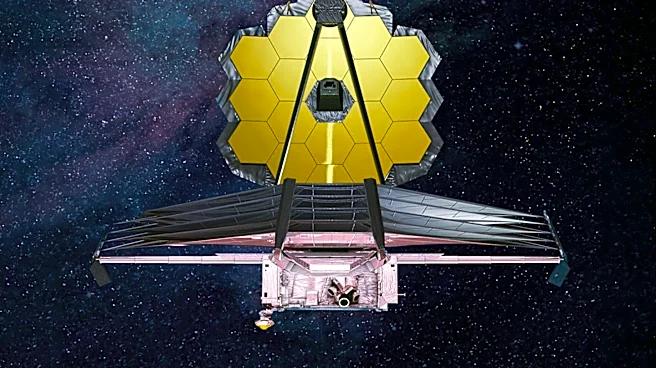
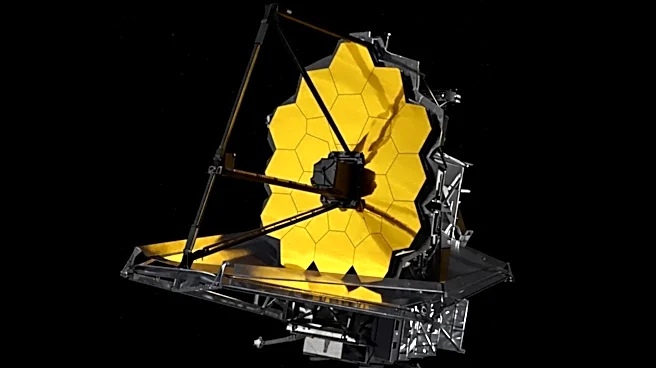
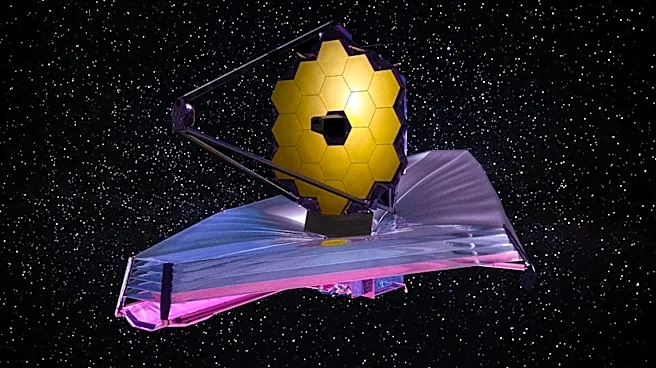
The James Webb Space Telescope (JWST) has been observing mysterious objects known as 'Little Red Dots' since 2022. These objects, appearing around 600 million years after the Big Bang, seem to vanish before the universe reaches 2 billion years old. Astronomers
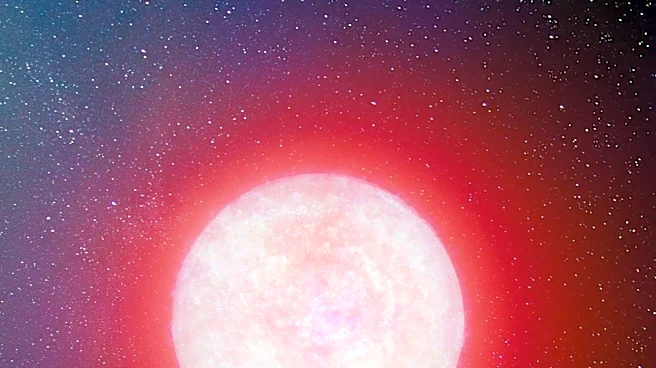
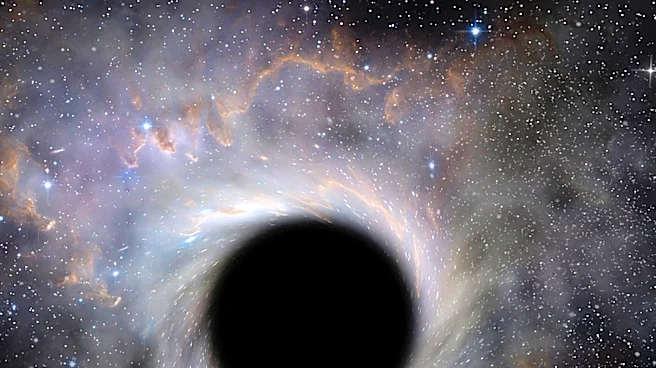
have proposed various theories about these dots, including the possibility that they are 'black hole stars' or supermassive stars within forming globular clusters. Globular clusters, which are densely packed with millions of ancient stars, are common in large galaxies like the Milky Way. However, their formation process remains unclear. The team from the University of Texas Austin suggests that these Little Red Dots could evolve into globular clusters, providing a potential link between these early cosmic phenomena and familiar structures in the universe today.
Why It's Important?
Understanding the nature of Little Red Dots could significantly impact our knowledge of cosmic evolution and the formation of globular clusters. These clusters are crucial for studying the early universe, as they contain some of the oldest stars. If Little Red Dots are indeed precursors to globular clusters, this discovery could reshape theories about star formation and the chemical evolution of galaxies. The unusual chemical composition of stars in globular clusters, rich in helium and metals but lacking expected elements like carbon and oxygen, suggests high-temperature nuclear fusion processes. This insight could lead to a deeper understanding of the conditions in the early universe and the lifecycle of massive stars.
What's Next?
Further research and observations are needed to confirm the connection between Little Red Dots and globular clusters. The team plans to continue analyzing data from the JWST to refine their models and explore other potential explanations. If the hypothesis holds, it could open new avenues for studying the early universe and the formation of large-scale cosmic structures. The scientific community will likely engage in discussions and further studies to validate these findings and explore their implications for astrophysics and cosmology.