



What's Happening?
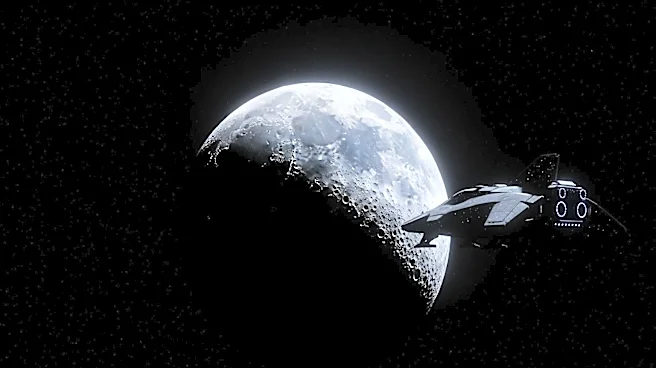
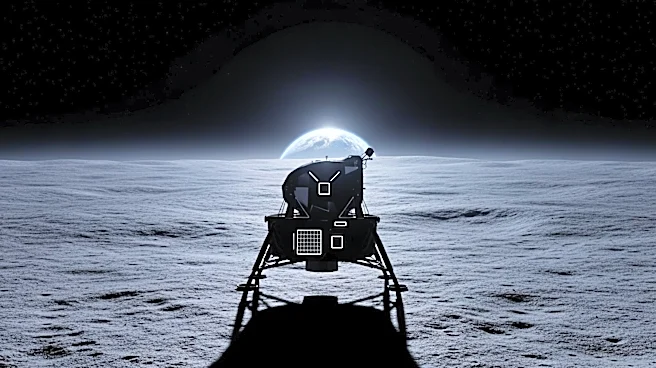
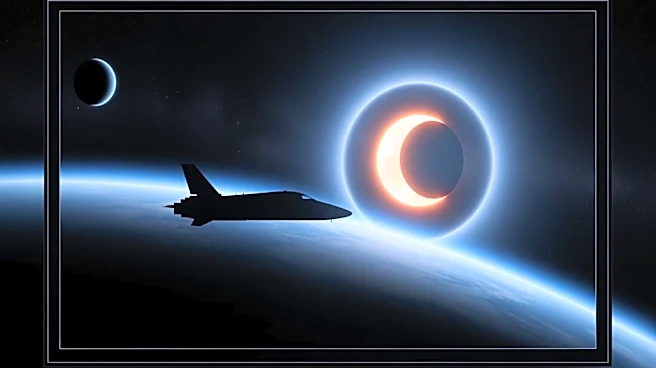
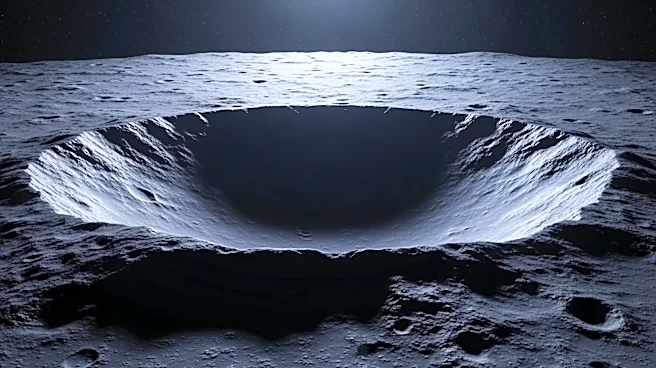
NASA has released new images from the Artemis II mission, showcasing the 'Earthset' and a solar eclipse as seen from the far side of the moon. The crew, aboard the Orion capsule, reached a record distance of 252,756 miles from Earth, surpassing Apollo
13's record. During the seven-hour flyby, astronauts captured views of the lunar surface, including previously unseen features like the Orientale Basin. The mission's images provide valuable insights into the moon's geology and origins, aiding future lunar exploration. The crew also witnessed a solar eclipse, observing the sun's corona and planets like Mars and Venus. The images highlight the mission's scientific achievements and the extraordinary human experience of space exploration.
Why It's Important?
The release of these images from Artemis II enhances scientific understanding of the moon and its geological features, contributing to the preparation for future lunar missions. The detailed observations of the moon's surface and the solar eclipse offer new data for researchers studying lunar geology and the solar system. The mission's success in capturing these images demonstrates the capabilities of the Orion spacecraft and the effectiveness of NASA's training and planning. The images also serve as a source of inspiration, showcasing the beauty and complexity of space, and reinforcing the importance of continued investment in space exploration.
Beyond the Headlines
The Artemis II mission's images highlight the potential for space exploration to deepen humanity's understanding of the universe and our place within it. The mission's achievements may inspire future generations to pursue careers in science and technology, driving innovation and discovery. The images also emphasize the collaborative nature of space exploration, with international partnerships playing a crucial role in advancing scientific knowledge. As NASA continues to explore deep space, the insights gained from missions like Artemis II will inform strategies for sustainable exploration and the search for life beyond Earth.