



What's Happening?
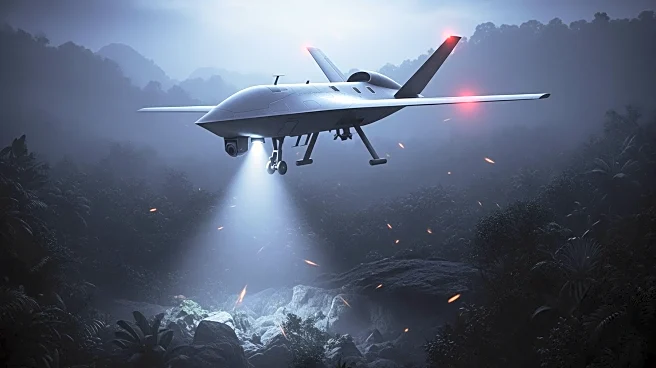
The Nigerian military has announced the successful elimination of a top Boko Haram commander, Abu Khalid, along with ten other militants in a night raid in Borno State. This operation marks a significant shift towards a more proactive military strategy,
supported by U.S. intelligence since November. The raid took place in the Kodunga area, where soldiers recovered weapons, food, and medical supplies from the insurgents. This development follows recent attacks by Boko Haram on a construction site and a military base, which resulted in numerous casualties. Boko Haram, a jihadi group originating in Nigeria, has been active since 2009, aiming to impose its radical interpretation of Islamic law. The insurgency has expanded to include the Islamic State West Africa Province (ISWAP), affecting neighboring countries and resulting in significant civilian casualties and displacements.
Why It's Important?
The operation underscores the ongoing security challenges in Nigeria, where the insurgency has displaced millions and caused widespread instability. The involvement of U.S. intelligence highlights international concern and cooperation in combating terrorism in West Africa. The proactive approach by the Nigerian military, supported by U.S. intelligence, could potentially reduce the frequency and impact of Boko Haram's attacks. This development is crucial for regional stability and could influence U.S. foreign policy and military engagement in Africa. The success of such operations may also bolster the Nigerian government's efforts to restore peace and security in affected regions, potentially improving the humanitarian situation.
What's Next?
The Nigerian military is likely to continue its offensive against Boko Haram and ISWAP, leveraging U.S. intelligence support. This could lead to further operations aimed at dismantling the insurgency's infrastructure and leadership. The international community, particularly the U.S., may increase its involvement in intelligence and military support to ensure the stability of the region. The Nigerian government may also face pressure to address the underlying socio-economic issues that contribute to the insurgency, such as poverty and lack of education. Continued success in military operations could lead to a reduction in violence and a gradual return to normalcy for displaced populations.