



What's Happening?
Recent research has uncovered that global coastal sea levels are significantly higher than previously estimated, with some regions experiencing levels up to 3 feet higher than assumed. This discrepancy is attributed to a 'methodological blind spot' in sea level rise
forecasts, which fails to account for factors such as tides, winds, ocean currents, temperature, and salinity. The study, published in Nature, suggests that the impacts of sea-level rise, including flooding and erosion, are expected to occur sooner than projected, threatening up to 132 million more people globally by 2100. The findings indicate that if sea level rises by around 3 feet, it would put 37% more land under water than currently assumed.
Why It's Important?
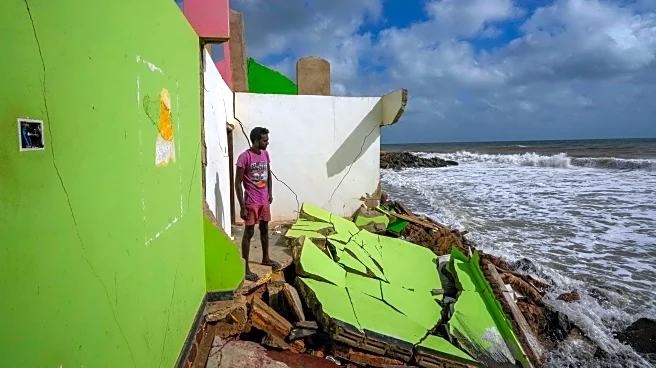
The revelation of higher-than-expected sea levels has significant implications for global coastal communities, particularly in Southeast Asia and parts of the Pacific. These areas are already vulnerable to the impacts of climate change, and the new findings suggest that the risks are more immediate than previously thought. This could lead to increased displacement of populations, loss of land, and economic challenges for affected regions. The study underscores the urgent need for more accurate coastal risk assessments to better prepare for and mitigate the effects of rising sea levels.
What's Next?
The study calls for a reevaluation of global sea levels and the full implications of the risks posed to coastal communities. It suggests that scientists and policymakers need to incorporate real-world satellite data with existing models to provide more accurate predictions. This could lead to changes in how coastal areas are managed and protected, potentially influencing international climate policy and funding for adaptation measures.
Beyond the Headlines
The findings highlight a broader issue of climate justice, as underestimations of sea level have been particularly egregious in parts of lower-income countries. These regions are often the most vulnerable to climate change impacts, yet they have less access to accurate data and resources for adaptation. The study suggests that more data collection, especially in lower-income countries, is necessary to ensure that all regions can adequately prepare for the challenges posed by rising sea levels.