




What's Happening?
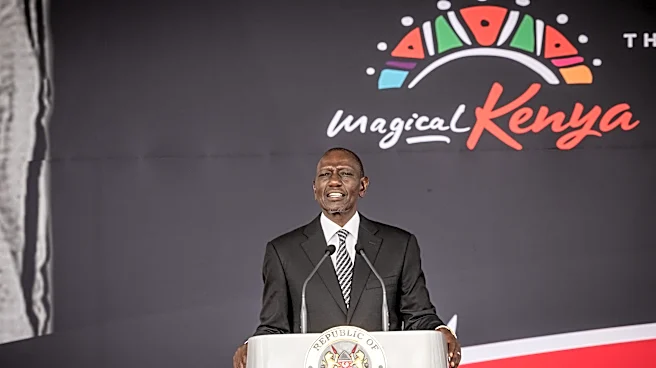
President William Ruto has extended his congratulations to Kenyan legal scholar Professor Phoebe Okowa on her election to a full nine-year term as a judge of the International Court of Justice (ICJ). In a message shared on his official X account, President Ruto expressed
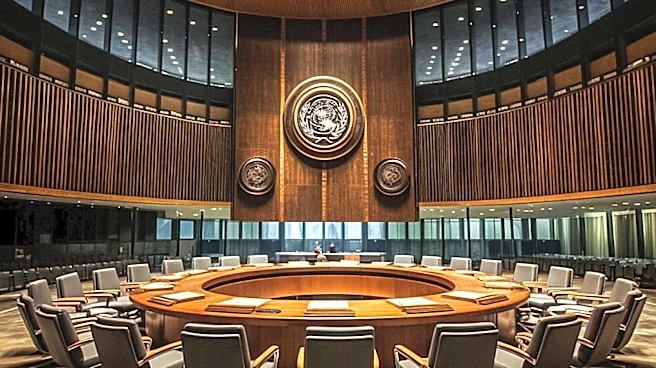
immense pride for Kenya, highlighting that Okowa's election signifies the country's significant contributions to international law. Her successful election, which required securing majority votes in both the United Nations General Assembly and the Security Council, is seen as an affirmation of the deep legal expertise, integrity, and excellence present among Kenyan professionals. Professor Okowa was among nine candidates vying for five positions on the ICJ bench during elections held at the United Nations headquarters in New York. She secured 183 votes in the General Assembly and 13 in the Security Council, ensuring her term will run from February 2027 to February 2036. Okowa, a Professor of Public International Law at Queen Mary University of London, previously made history as the first African woman elected to the United Nations International Law Commission in 2021.
Why It's Important?
Professor Phoebe Okowa's election to a full nine-year term at the International Court of Justice (ICJ) is a significant development with broader implications for international law and diplomacy, including for the U.S. Her presence on the ICJ bench, a principal judicial organ of the United Nations, reinforces the diversity of legal perspectives and expertise within the international judicial system. For the U.S., which frequently engages with international legal frameworks and institutions, the composition of the ICJ is crucial. A diverse bench can bring varied interpretations and approaches to complex international disputes, potentially influencing outcomes that affect U.S. foreign policy, trade agreements, and international relations. Okowa's background as an African woman and her expertise in public international law could introduce new dimensions to the court's deliberations, particularly on issues related to developing nations, human rights, and international economic law. Her election also underscores the growing influence and recognition of legal scholars from African nations on the global stage, contributing to a more representative international legal order.
What's Next?
Professor Okowa will officially begin her full nine-year term as an ICJ judge in February 2027, serving until February 2036. During this period, she will participate in the court's work of settling legal disputes between states and issuing advisory opinions on legal questions referred by authorized UN institutions. Her role will involve interpreting and applying international law to complex cases, which could have far-reaching implications for international relations and global governance. Her continued presence on the court is expected to further enhance Kenya's standing in the international legal community and potentially inspire more legal professionals from Africa to pursue careers in international law. The ICJ's decisions often set precedents and influence the development of international law, making the contributions of each judge critical. Her tenure will be closely watched by legal scholars, diplomats, and international organizations for her impact on the court's jurisprudence.
Beyond the Headlines
Professor Okowa's election transcends a mere judicial appointment; it represents a powerful symbol of progress in international representation and gender equality within global institutions. As an African woman, her achievement challenges historical underrepresentation and highlights the increasing recognition of diverse voices in shaping international legal norms. This has profound cultural implications, inspiring future generations of legal professionals, particularly women and those from underrepresented regions, to aspire to leadership roles in international law. Ethically, her presence on the ICJ reinforces the principle of universalism in international law, ensuring that a broader range of legal traditions and perspectives are considered in the pursuit of justice. In the long term, her contributions could help to decolonize international legal discourse and foster a more inclusive and equitable global legal order, reflecting the diverse realities of the world's nations. Her role will be instrumental in upholding the ICJ's mandate of promoting peaceful resolution of disputes and strengthening the rule of law internationally.