






What's Happening?
Indigenous leaders in Ecuador are actively warning multinational companies and investors against participating in new oil extraction plans in the Amazon rainforest. The Ecuadorian government recently announced a tender for remote Amazon oil blocks, despite
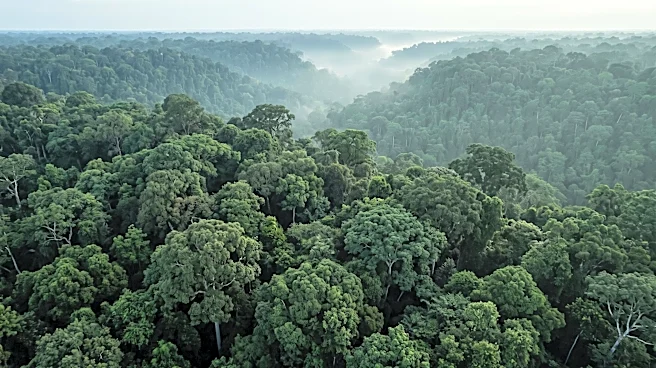
previous failures to meet exploration timetables and a joint declaration from Ecuador's seven Indigenous nations rejecting oil-licensing programs. The proposed plans involve 14 Ronda Suroriente blocks and four Ronda Subandina blocks, covering approximately three million hectares, much of which is remote, roadless rainforest. These areas overlap with the ancestral territories of the Kichwa, Shuar, Achuar, Waorani, Shiwiar, Sápara, and Andwa tribes. Indigenous organizations have historically opposed oil extraction in these territories for decades, citing high development costs, uncertain returns, and significant legal, operational, and environmental risks. Environmentalists suggest that new drilling and infrastructure will exacerbate deforestation, increase greenhouse gas emissions, and weaken the Amazon's role as a critical carbon sink.
Why It's Important?
This situation highlights a significant conflict between economic development goals and environmental and Indigenous rights in a globally critical ecosystem. The Amazon rainforest is a vital carbon sink, and its continued degradation through oil extraction could accelerate global warming, impacting climate patterns and biodiversity worldwide. For U.S. and international investors, engaging in these projects carries substantial reputational, financial, and legal risks due to the strong opposition from Indigenous communities and environmental groups. The assertion of Free, Prior, and Informed Consent (FPIC) by Indigenous peoples, an international human rights law protecting Indigenous land, means that projects lacking this consent can face prolonged legal battles, protests, and operational disruptions. This could lead to stranded assets and significant financial losses for companies involved, as seen in a 2012 precedent where a similar tender attracted minimal bids and no exploratory wells were drilled despite an international campaign.
What's Next?
The seven Indigenous nations in Ecuador remain firm in their call for the government to cancel both proposed oil sites, advocating for Indigenous-led alternatives that prioritize a transition away from fossil fuels. Multinational companies and investors will need to weigh the potential economic gains against the significant risks posed by Indigenous opposition and environmental concerns. The Ecuadorian government, under President Daniel Noboa, is seeking $1 billion in investment for the program, indicating a continued push for extraction. However, the historical resistance and the current unified stance of Indigenous leaders suggest that any attempts to proceed without their consent will likely face sustained challenges, potentially leading to further legal action, international pressure, and continued operational hurdles for any companies that choose to invest.
Beyond the Headlines
The conflict in Ecuador underscores a broader global tension between resource extraction and the rights of Indigenous communities, particularly in ecologically sensitive areas. It raises ethical questions about corporate responsibility and the long-term environmental consequences of short-term economic gains. The concept of FPIC is central to this debate, challenging traditional notions of national sovereignty over natural resources when those resources are located on ancestral lands. This situation could set a precedent for how future resource development projects are approached in other Indigenous territories globally, emphasizing the growing power of Indigenous voices in shaping environmental and economic policy. The outcome in Ecuador will likely influence international investment strategies in similar regions, pushing for more sustainable and rights-respecting development models.