




What's Happening?
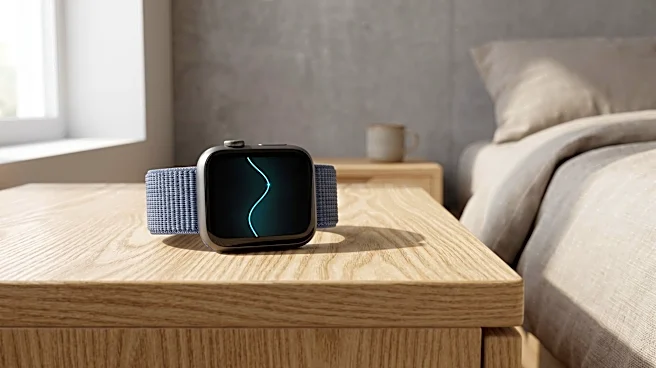
AI wearables, including smartwatches, rings, and fitness bands, are evolving beyond basic step counters to sophisticated health-monitoring tools capable of detecting illness days before symptoms appear. These devices continuously measure vital signs such
as resting heart rate, heart rate variability, skin temperature, respiratory rate, and sleep patterns. By establishing a personal baseline for these metrics, wearables can identify subtle deviations that may indicate an impending infection or other health issues. Studies, including one from Stanford University on Oura smart rings, have shown that changes in these metrics can identify COVID-19 cases up to three days prior to symptom onset. Research published in Nature Digital Medicine also highlighted improved flu detection rates when combining resting heart rate and sleep data from consumer wearables. Projects by the Department of Veterans Affairs and the Scripps Research Translational Institute have utilized Fitbit data to predict flu outbreaks, demonstrating a public health potential. However, the market for these devices faces challenges, including privacy concerns and the accuracy variability among different devices and individuals.
Why It's Important?
The advancement of AI wearables for early illness detection holds significant implications for public health and individual well-being in the U.S. Early detection can lead to quicker intervention, potentially reducing the severity and spread of illnesses. For individuals, this means a proactive approach to health, allowing them to rest, seek medical advice, or take preventative measures before symptoms become debilitating. From a public health perspective, the ability to predict outbreaks, as demonstrated by projects using Fitbit data, could revolutionize disease surveillance and response strategies, enabling more timely and targeted interventions. However, the increasing capability of these devices to collect sensitive health information raises substantial privacy concerns. The continuous monitoring of physiological data creates a vast repository of personal health information, making users vulnerable to data breaches or misuse. This tension between health benefits and privacy risks is a critical challenge that needs to be addressed for widespread adoption and trust in these technologies.
What's Next?
The future of AI wearables in early illness detection is expected to see continued advancements in sensor technology and machine-learning algorithms. This will likely lead to improved specificity in differentiating infections from other stressors and the integration of new biomarkers, such as sweat analysis or continuous glucose monitoring. These developments aim to enhance the accuracy and reliability of early warning signals, reducing false positives. Furthermore, there is potential for these devices to contribute to population-level disease surveillance, enabling faster public health responses to emerging threats. Personalized predictive models that learn an individual's unique physiology over years are also anticipated, offering highly tailored health insights. However, addressing the privacy concerns and ensuring data security will be crucial for the successful integration and public acceptance of these advanced wearable technologies. Regulatory frameworks and industry standards will likely evolve to manage the ethical implications of continuous health data collection.
Beyond the Headlines
The deeper implications of AI wearables extend beyond immediate health benefits and privacy concerns, touching upon ethical, legal, and cultural dimensions. The ability of these devices to predict illness before symptoms manifest could shift societal perceptions of health from reactive treatment to proactive prevention. This paradigm shift might lead to new healthcare models focused on continuous monitoring and personalized interventions. Ethically, questions arise about the responsibility of individuals to act on these early warnings and the potential for discrimination based on health predictions. Legally, the ownership and access to such intimate health data will become increasingly complex, potentially leading to new legislation regarding data rights and protection. Culturally, the constant awareness of one's physiological state could foster a heightened sense of health anxiety or, conversely, empower individuals with greater control over their well-being. The long-term impact on human behavior and the doctor-patient relationship, where AI-driven insights supplement or even challenge professional medical advice, remains to be fully explored.