







What's Happening?
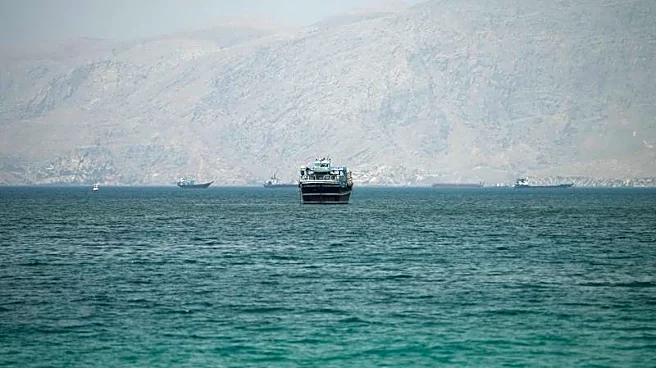
Tensions between the United States and Iran have intensified following an alleged attack by Iran on a cargo ship near Oman, as reported by a U.S. official. The ship, flying a Singapore flag, was attacked in the Strait of Hormuz, a critical oil shipping
lane. This incident has heightened concerns over energy security and the stability of oil supplies. Concurrently, disagreements persist over the use of funds outlined in a memorandum of understanding between the two nations. The Trump administration claims that any released Iranian assets should be used to purchase U.S. agricultural products, a point contested by Iran's parliament. These developments occur amidst broader geopolitical negotiations involving the U.S., Iran, Pakistan, and Qatar, aimed at resolving Middle Eastern conflicts.
Why It's Important?
The Strait of Hormuz is a vital corridor for global oil transportation, and any disruption could significantly impact oil prices and energy markets worldwide. The ongoing financial disputes between the U.S. and Iran further complicate diplomatic relations, potentially affecting international trade and economic stability. The U.S. insists on controlling the use of Iranian funds, which could influence Iran's economic strategies and its relations with other countries. The broader geopolitical negotiations, if successful, could lead to a reduction in regional tensions, benefiting global security and economic interests.
What's Next?
Future developments may include further diplomatic engagements to resolve the financial disputes and ensure the security of the Strait of Hormuz. The international community will likely monitor these negotiations closely, as their outcomes could have significant implications for regional stability and global energy markets. Potential reactions from major stakeholders, including OPEC members and global oil consumers, will be critical in shaping the next steps.