





What's Happening?
Bipartisan and bicameral bills have been introduced in both the Senate and House of Representatives to designate biotechnology and biomanufacturing as critical infrastructure. Senators Todd Young (R-IN) and Maggie Hassan (D-NH) introduced the bills in the Senate,
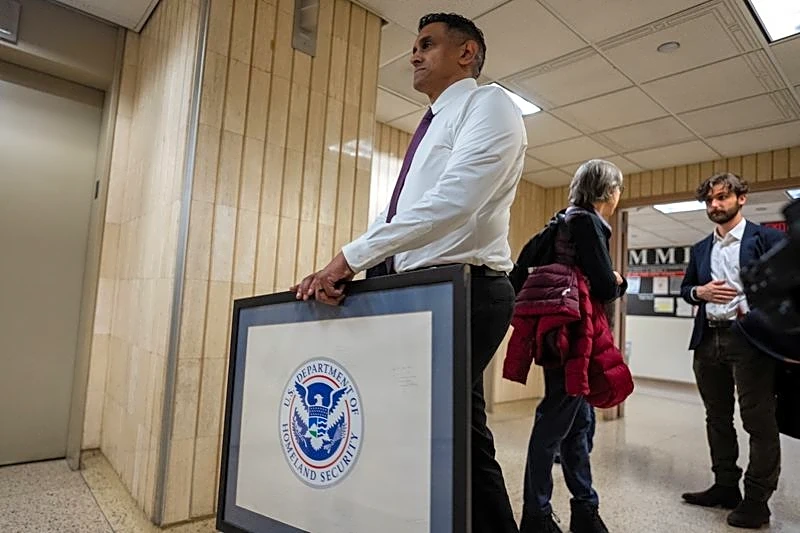
while Representatives Stephanie Bice (R-OK), Ro Khanna (D-CA), and Scott Peters (D-CA) introduced them in the House. These bills, titled the Protecting Biotechnology and Biomanufacturing as Critical Infrastructure Act (H.R. 10569, S. 5502) and the Protecting Biological Data as Critical Infrastructure Act (H.R. 10568, S. 5522), aim to require the Cybersecurity and Infrastructure Security Agency (CISA) to protect biotechnology data and infrastructure from malicious actors. The first bill directs the Department of Homeland Security (DHS) to develop a work plan within 45 days to ensure protection without creating a new sector, while the second bill mandates CISA to oversee security management of genetic data systems and provide training for federal personnel.
Why It's Important?
Designating biotechnology and biomanufacturing as critical infrastructure is crucial for national security and economic stability. These sectors are vital for advancements in medicine, agriculture, and various industrial processes, making their protection from cyber threats and other malicious activities paramount. The legislation aims to safeguard sensitive biological data, including genomic sequences, which could have profound implications if compromised. By integrating these sectors into existing critical infrastructure frameworks, the U.S. government can enhance its ability to defend against attacks, ensure the continuity of essential services, and protect intellectual property. This move acknowledges the growing strategic importance of biotechnology in the 21st century.
What's Next?
The proposed legislation outlines specific next steps for federal agencies. The Department of Homeland Security (DHS) will be required to develop and execute a work plan within 45 days, identifying stakeholders, creating an outreach plan, and updating strategic plans by September 30, 2027. DHS will also conduct a follow-up evaluation within two years to assess the protection of critical biotechnology areas. CISA will be tasked with overseeing the planning, management, and coordination of duties related to the security of genetic data systems and providing training for relevant federal personnel. These actions will lead to enhanced security protocols and a more coordinated national effort to protect these critical sectors.
Beyond the Headlines
The designation of biotechnology and biomanufacturing as critical infrastructure has deeper implications for the future of scientific research, economic competitiveness, and ethical considerations. Protecting genetic data systems raises significant privacy and ethical questions, requiring careful consideration of how sensitive biometric information is managed and secured. This legislative push also highlights the increasing convergence of biological sciences and cybersecurity, creating a new frontier for national defense. The long-term impact could include fostering greater innovation by ensuring a secure environment for research and development, while also establishing precedents for how emerging technologies are classified and protected within national security frameworks.