






What's Happening?
Ukraine's parliament is scheduled to make another attempt next week to vote on a bill that introduces a tax on parcels sent from abroad. This legislative action is a critical condition for Ukraine to secure continued financial backing from the International
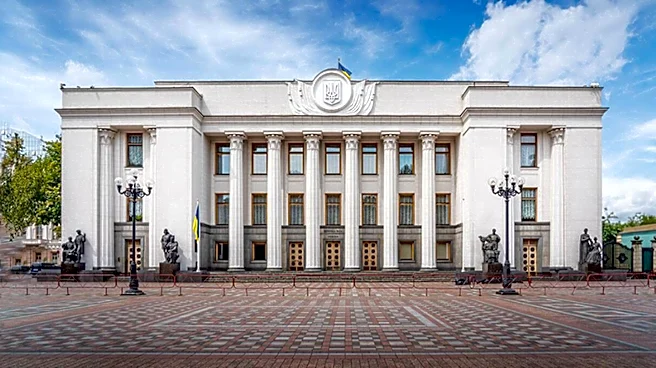
Monetary Fund (IMF). The bill, which proposes a value-added tax on parcels from abroad worth under €150 ($175), previously failed to pass its first reading last week. Danylo Hetmantsev, head of the parliamentary committee for finances, taxes, and customs, stated that the government plans to resubmit the document to parliament. This re-vote comes as Ukraine faces a significant budget deficit exceeding $32 billion this year, exacerbated by the ongoing conflict with Russia. The IMF mission recently visited Kyiv for scheduled talks, emphasizing that no exceptions regarding the bill should be expected. Verkhovna Rada Speaker Ruslan Stefanchuk underscored the urgency, stating that decisions impacting Ukraine's international aid and state budget stability cannot be delayed.
Why It's Important?
The passage of this tax bill is crucial for Ukraine's financial stability and its ability to sustain essential government functions, including social payments, amidst the fifth year of war. The IMF's conditionality highlights the significant influence international financial institutions wield over the domestic policy decisions of aid-dependent nations. Failure to pass the bill could jeopardize further tranches of IMF funding and other international support, potentially leading to a deeper budget crisis. This situation underscores the delicate balance between national sovereignty in legislative matters and the necessity of adhering to the requirements of international lenders. The outcome will serve as a litmus test for the Ukrainian parliament's capacity to enact necessary reforms, demonstrating its commitment to fiscal responsibility and its ability to navigate complex political pressures while securing vital foreign aid.
What's Next?
The Ukrainian parliament is expected to review the resubmitted tax bill next week. The government and parliamentary leadership are under pressure to ensure its passage, given the explicit demands from the IMF and the country's urgent financial needs. The ongoing discussions between lawmakers, government representatives, and parliamentary committee chairs aim to synchronize legislative work on bills tied to international support programs, including the IMF. The focus will be on efficiently processing amendments and coordinating efforts to pass critical decisions. The outcome of this vote will directly influence the timing and availability of future international financial assistance, which is vital for Ukraine's economic survival and its ability to continue funding its defense and social programs.
Beyond the Headlines
The struggle to pass this tax bill reveals deeper challenges within Ukraine's political landscape, including accusations of populism, a lack of focus on priority issues, and poorly drafted legislation, as cited by some parliamentarians. This internal friction, even in the face of external pressure and a national crisis, points to systemic issues in governance and legislative effectiveness. The reliance on international aid, while necessary, also raises questions about long-term economic sovereignty and the potential for external conditions to shape domestic policy in ways that may not always align with internal political consensus. The situation highlights the broader implications of war on a nation's economic independence and the complex interplay between geopolitical conflict, international finance, and domestic political will.