





What's Happening?
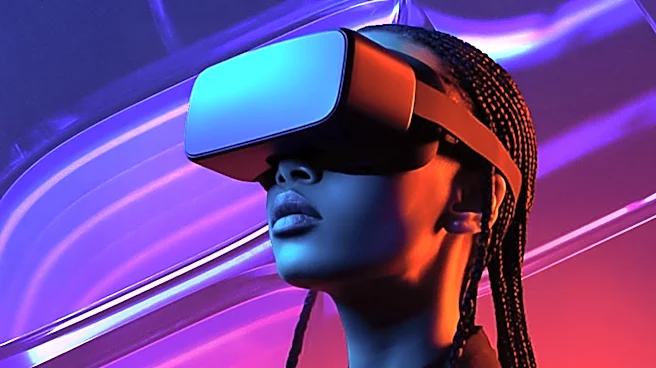
The Kinetic Immersion and Extended Reality (KIX) Lab has launched its inaugural mini-grant-funded faculty projects, focusing on research and creative activities across various disciplines using immersion and extended reality technologies. These projects span
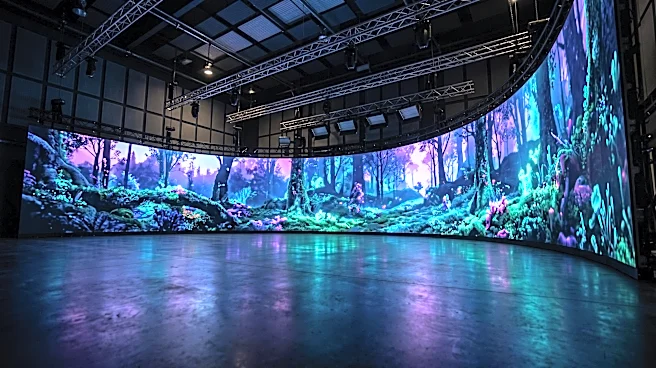
diverse fields, including a dance performance interacting with virtual environments, the development of VR content for a bilingual children's opera, and the measurement of gait and obstacle-negotiation behavior in realistic virtual settings. Researchers are leveraging the KIX Lab's advanced capabilities, such as its virtual production wall, immersive audio systems, motion-capture hardware, and wireless wearable sensors. Each project aims to produce an experiential prototype or demonstration that can serve as a foundation for larger, more focused research endeavors. Examples include 'Recursive Bodies,' a live performance combining dance, video, lighting, and electronic music, and 'Oliverso: The Immersive Experience,' which will develop VR content for a children's opera to engage students with music, language, and culture.
Why It's Important?
This initiative is important because it signifies a significant advancement in interdisciplinary research and creative activity within U.S. academic institutions. By providing faculty with access to cutting-edge immersive technologies, the KIX Lab is fostering innovation that can lead to breakthroughs in various fields, from performing arts and education to health and human behavior. The development of VR content for educational purposes, such as the bilingual children's opera, demonstrates the potential to create more engaging and effective learning experiences, addressing diverse student needs. Furthermore, projects measuring gait and obstacle negotiation in virtual environments could have real-world applications in physical therapy, rehabilitation, and the design of safer urban spaces. This investment in immersive technology research positions the institution at the forefront of technological integration in academia, potentially attracting top talent and securing future funding for advanced studies. The interdisciplinary nature of these projects also promotes collaboration and the cross-pollination of ideas, leading to novel solutions and perspectives.
What's Next?
The initial mini-grant projects are designed to generate experiential prototypes or demonstrations, which will then serve as foundational work for larger and more focused projects. Researchers will gather data and experience from these initial phases to refine their concepts and expand their scope. This could lead to the development of full-scale productions, comprehensive educational programs, or advanced research studies. The KIX Lab will likely continue to support faculty in securing external funding based on the success of these prototypes. Furthermore, the insights gained from these projects could inform the future development of immersive technologies and their applications across various sectors. The success of these initiatives may also encourage other academic institutions to invest in similar immersive technology labs, fostering a broader trend of technological integration in research and creative endeavors.
Beyond the Headlines
Beyond the immediate research outcomes, the KIX Lab's initiative highlights a broader shift in how education and research are conducted, embracing immersive technologies to push boundaries. Ethically, the use of VR and AR in performance and education raises questions about accessibility and equitable access to these advanced tools, ensuring that the benefits are not limited to a select few. Culturally, projects like the bilingual children's opera in VR demonstrate how technology can be used to preserve and promote diverse languages and cultural narratives in innovative ways. The exploration of human movement and interaction in virtual spaces also delves into the psychological and sociological impacts of digital environments on human behavior. Long-term, the widespread adoption of these technologies could redefine traditional learning environments, artistic expression, and even how we understand and interact with our physical world, blurring the lines between the real and the virtual. This also opens up discussions about digital literacy and the skills needed to navigate increasingly immersive digital landscapes.