



What's Happening?
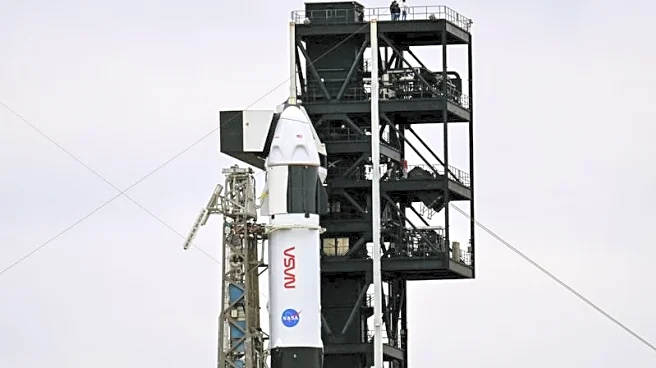
NASA's SpaceX Crew-12 mission successfully launched from Cape Canaveral Space Force Station in Florida, carrying four astronauts to the International Space Station (ISS). The crew includes NASA astronauts Jessica Meir and Jack Hathaway, ESA astronaut Sophie
Adenot, and Roscosmos cosmonaut Andrey Fedyaev. The mission is part of NASA's Commercial Crew Program, which aims to provide reliable access to space and maximize the use of the ISS for research. The crew will conduct various scientific experiments, including studies on pneumonia-causing bacteria, cardiovascular treatments, and plant health monitoring, to advance human space exploration and benefit life on Earth.
Why It's Important?
The Crew-12 mission is significant as it continues to support NASA's goals of advancing scientific knowledge and developing technologies for future deep space exploration. The research conducted on the ISS can lead to breakthroughs in medical treatments and agricultural practices, which have direct applications on Earth. Additionally, the mission demonstrates the successful collaboration between NASA and private companies like SpaceX, highlighting the growing role of commercial partnerships in space exploration. This collaboration is crucial for maintaining a sustainable presence in low Earth orbit and preparing for future missions to the Moon and Mars.
What's Next?
Following the successful launch, the Crew-12 spacecraft will dock with the ISS, where the astronauts will join the existing crew to conduct their research. NASA will continue to monitor the mission from its control centers, ensuring the safety and success of the crew's activities. The mission's outcomes will contribute to NASA's long-term plans for human exploration beyond low Earth orbit, including potential missions to the Moon and Mars. The data and experiences gained from Crew-12 will inform future missions and help refine the technologies needed for deep space travel.