




What's Happening?
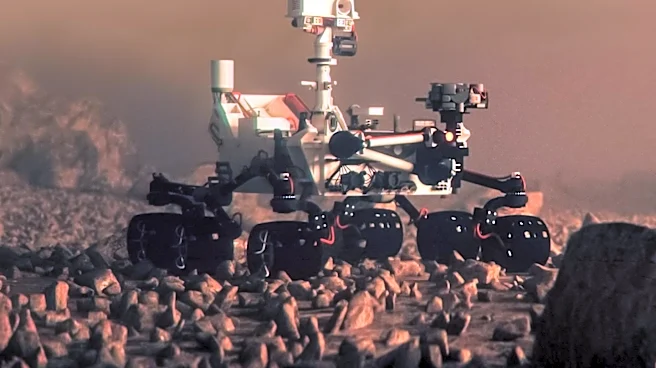
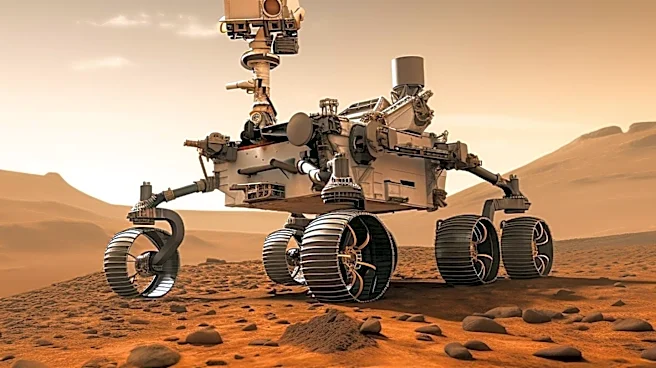
NASA's Perseverance rover has completed a marathon distance on Mars, achieving this milestone in less than half the time it took the Opportunity rover. The rover's success is attributed to its advanced AutoNav system, which allows it to navigate autonomously
by analyzing terrain and avoiding hazards. In December 2025, Perseverance also completed the first AI-planned drives on another planet, using generative AI to analyze orbital images and plan routes. These advancements highlight the rover's ability to conduct scientific exploration with minimal human intervention, marking a significant achievement in space exploration technology.
Why It's Important?
The successful completion of a marathon distance by Perseverance demonstrates the effectiveness of autonomous navigation systems in space exploration. This capability allows for more efficient use of mission time, enabling the rover to cover greater distances and conduct more scientific investigations. The integration of AI in planning routes represents a step forward in reducing reliance on Earth-based control, which is crucial for future missions to more distant locations. These technological advancements could pave the way for more ambitious exploration missions, enhancing our understanding of Mars and other celestial bodies.
What's Next?
NASA may continue to refine and expand the use of autonomous and AI technologies in its exploration missions. Future missions could see increased autonomy, allowing rovers to make more complex decisions independently. This could lead to more efficient exploration of challenging terrains and the potential for longer missions. The success of Perseverance's autonomous capabilities may influence the design and planning of upcoming missions, including those targeting the Moon and beyond. Continued advancements in AI and robotics will be essential for the future of space exploration.