
What's Happening?
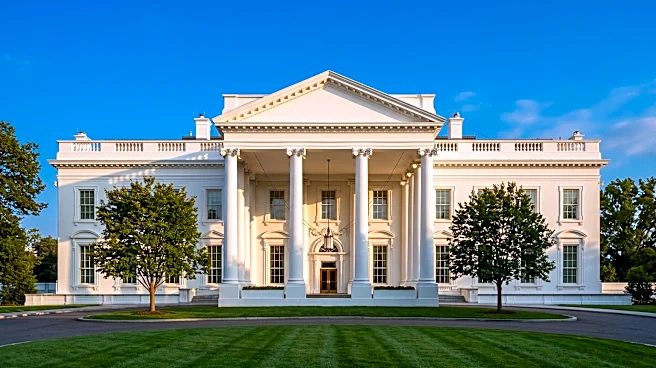
The Trump administration has intensified its pressure on the Smithsonian Institution, accusing its leadership of promoting a 'radical ideology' that undermines 'shared American identity.' This follows
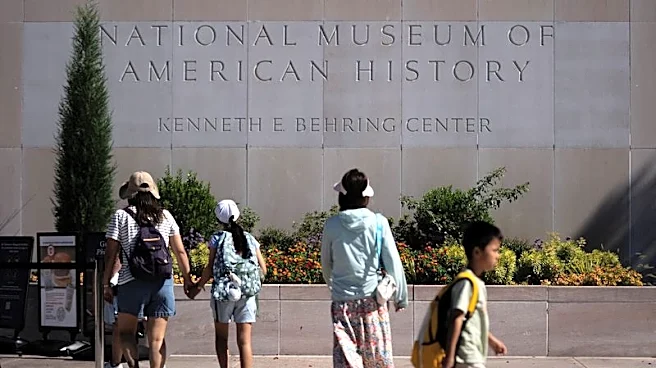
a July 2026 directive from President Trump to the National Park Service to install signage at the Smithsonian National Museum of American History. These signs would claim certain exhibits contain 'inaccurate information' and aim to 'inform' visitors about a White House report that criticized the museum. The administration's concerns stem from a report by the White House Domestic Policy Council, which characterized Smithsonian leadership as fostering 'extreme political activism' and presenting materials intended to 'undermine faith in American institutions.' The report specifically targeted the National Museum of American History, alleging it cannot be trusted to tell America's story honestly. The Smithsonian Institution has declined to comment on these developments.
Why It's Important?
This situation highlights a significant conflict between a presidential administration and a major cultural institution traditionally seen as independent. The administration's actions, including the threat to cut funding and withdraw support from executive departments and agencies, could have profound implications for the Smithsonian's operations, research, and ability to curate exhibits freely. The accusation of 'ideological bias' and the demand for 'warning' signs challenge the institution's academic freedom and its role in interpreting American history. This could set a precedent for future administrations to exert political influence over cultural and educational bodies, potentially leading to self-censorship or a chilling effect on scholarly interpretations. The dispute also raises questions about the balance between governmental oversight and the autonomy of cultural institutions in a democratic society, impacting how historical narratives are presented to the public.
What's Next?
The Trump administration has sent a letter to the Smithsonian, requesting an in-person meeting with its board to address the findings outlined in the White House report. This meeting will likely determine the immediate future of the relationship between the administration and the Smithsonian. The administration's threat to sever support, including the loaning of artifacts, procurement processes, and discretionary grants, could force the Smithsonian to re-evaluate its exhibit content or face significant operational challenges. The Smithsonian's response to these demands, and whether it will concede to any changes or continue to assert its independence, will be closely watched. The outcome could influence public perception of the museum's neutrality and its ability to maintain its mission of scholarship and historical accuracy.
Beyond the Headlines
Beyond the immediate political skirmish, this situation touches upon deeper issues concerning the role of national museums in shaping collective memory and national identity. The administration's push for a specific interpretation of American history, particularly one that emphasizes 'inspiring, unifying, and worthy' narratives, raises questions about historical revisionism and the suppression of diverse perspectives. It also highlights the ongoing cultural debates within the U.S. regarding how historical events, especially those involving difficult or controversial topics, should be presented to the public. The potential for political interference in curatorial decisions could erode public trust in the objectivity of cultural institutions and their ability to engage in critical historical inquiry, ultimately impacting the educational and cultural landscape of the nation.