








What's Happening?
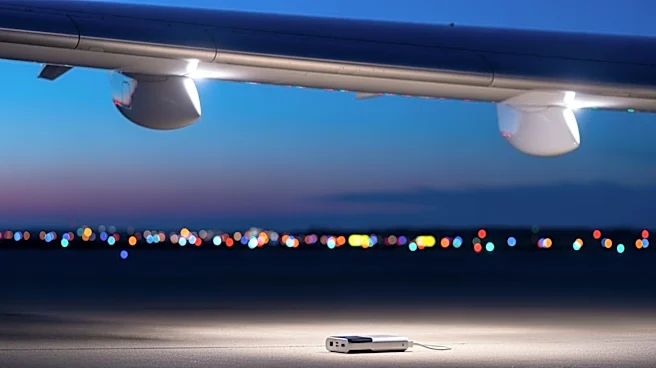
An EasyJet flight traveling from Hurghada, Egypt, to London was diverted to Rome after a passenger reported that a power bank was charging a device in their checked luggage. The incident occurred three and a half hours into the flight, prompting the captain
to divert the plane to Rome Fiumicino Airport as a precautionary measure. EasyJet emphasized that the safety of passengers and crew is their top priority, and the diversion was in line with safety regulations. Passengers were provided with accommodations and meals before continuing their journey to London the following day. The incident highlights ongoing concerns about the safety of lithium-ion batteries on flights, which have been linked to numerous incidents involving smoke, fire, or extreme heat.
Why It's Important?
The diversion underscores the potential hazards associated with lithium-ion batteries, which are commonly used in consumer electronics. These batteries can pose significant safety risks if they overheat or are damaged, leading to incidents such as thermal runaway. The Federal Aviation Administration has recorded 563 incidents related to lithium-ion batteries on flights over a 20-year period, with battery packs accounting for a significant portion. This incident may prompt airlines and regulatory bodies to reassess and potentially tighten safety protocols regarding the carriage and use of power banks on flights. The aviation industry must balance passenger convenience with safety, ensuring that such incidents are minimized to protect passengers and crew.
What's Next?
In response to the incident, airlines may review their policies on power banks and other electronic devices in checked luggage. The International Civil Aviation Organization has already imposed restrictions on power banks, limiting passengers to two per flight and prohibiting their use during flights. Airlines might consider further measures, such as increased passenger awareness campaigns or stricter enforcement of existing rules. Additionally, regulatory bodies could explore new technologies or materials to mitigate the risks associated with lithium-ion batteries. The incident may also lead to increased collaboration between airlines and manufacturers to develop safer battery technologies.