






What's Happening?
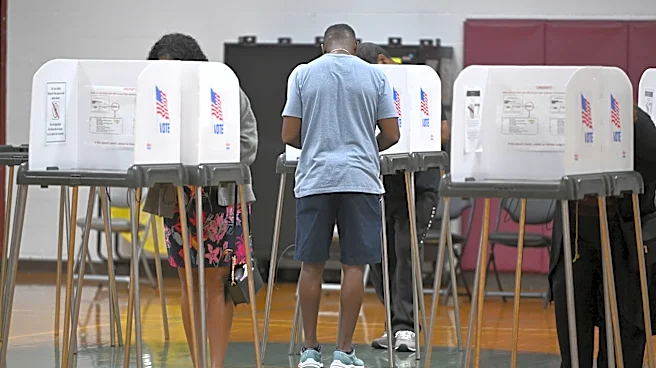
An initiative aimed at opening Oregon's primary elections to nonaffiliated voters has stalled, prompting its leaders to seek legislative support. The current closed primary system in Oregon restricts nonaffiliated voters from participating as candidates
or voters in primary elections for key positions such as Congress, the Legislature, and statewide offices. This system has been criticized for treating nonaffiliated voters as second-class citizens, as they are unable to influence which candidates advance to the general election. Despite the growing number of nonaffiliated voters, who now outnumber registered Democrats and Republicans in Oregon, the closed primary system remains in place. The initiative, known as the Voters Fairness Act, aimed to allow nonaffiliated voters equal participation in taxpayer-funded elections. However, it faced challenges due to partisan disputes over ballot language, leading to its suspension for the 2026 ballot.
Why It's Important?
The stalled initiative highlights ongoing debates about electoral fairness and representation in Oregon. With nonaffiliated voters constituting a significant portion of the electorate, their exclusion from primary elections raises questions about democratic inclusivity and the legitimacy of electoral outcomes. The current system benefits the major parties by allowing them to control candidate selection, despite their declining membership. This situation underscores the need for electoral reforms that reflect the changing political landscape and ensure that all voters have a voice in the democratic process. The outcome of this initiative could set a precedent for other states grappling with similar issues, potentially influencing national discussions on electoral reform.
What's Next?
The leaders of the initiative plan to revisit their strategy and may propose alternative methods to achieve their goals. They intend to encourage the Oregon Legislature to address the issue in the 2027 session. If legislative efforts fail, they may consider reintroducing the initiative for the 2028 ballot. The ongoing efforts to reform the primary system will likely involve continued advocacy and public engagement to build support for changes that ensure equal voting rights for nonaffiliated voters.