







What's Happening?
The Gates Foundation has announced a commitment of at least $1 billion over the next two years to expand equitable access to artificial intelligence (AI) and AI-enabled solutions. This initiative specifically targets communities that have historically
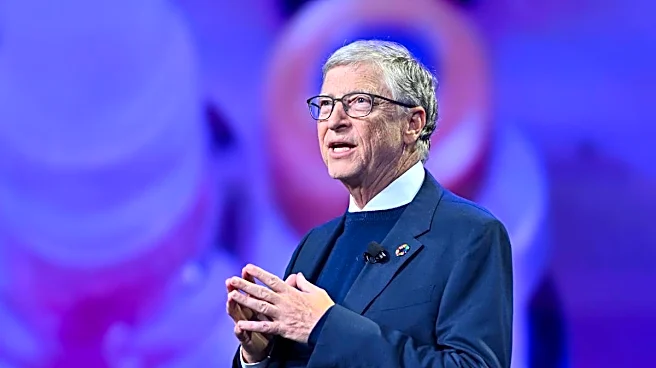
had limited access to emerging technologies. The announcement coincides with the foundation's 10th annual Goalkeepers Report, titled 'Make This Matter: AI, Equity, and the Choice We Can’t Delay,' which explores how AI can be developed to narrow economic and social disparities rather than widen them. A significant portion of this funding, 10%, will be allocated to agriculture, supporting initiatives that provide smallholder farmers with AI-generated advice tailored to their specific soil, weather, and crop conditions. Another 10% will be dedicated to building the necessary digital infrastructure for more equitable AI, including the creation of datasets that cover languages currently underserved by existing AI systems. Bill Gates, Chair of the Gates Foundation, emphasized that the organization was founded to address situations where those with the greatest needs have the least influence over innovation, and AI presents a similar, rapidly evolving challenge.
Why It's Important?
This substantial investment by the Gates Foundation underscores a critical global challenge: ensuring that the rapid advancements in artificial intelligence benefit all populations, particularly the most underserved. The focus on equitable access aims to prevent AI from exacerbating existing economic and social inequalities. By directing funds towards sectors like agriculture, the initiative has the potential to significantly improve the livelihoods of smallholder farmers, who often lack access to crucial information and resources. Tailored AI advice on farming practices can lead to increased yields, better resource management, and enhanced food security in vulnerable regions. Furthermore, the investment in digital infrastructure and language datasets is vital for making AI tools truly inclusive, allowing diverse communities to engage with and benefit from these technologies in their native languages. This proactive approach seeks to shape the trajectory of AI development to be more inclusive and impactful on a global scale, rather than allowing market forces alone to dictate its reach and beneficiaries.
What's Next?
The Gates Foundation will proceed with the allocation of the $1 billion investment over the next two years, focusing on specific projects in agriculture, digital infrastructure, and other areas identified in their Goalkeepers Report. The foundation is actively calling upon governments, technology companies, philanthropies, and other organizations to join this effort by contributing funding, expertise, and policy support. This collaborative approach is intended to amplify the impact and ensure AI becomes more accessible and affordable globally. Future steps will likely involve the development and deployment of AI tools in healthcare and education, as highlighted in the report's examples of existing foundation-supported initiatives. The success of these initial investments will be closely monitored to inform further strategies for leveraging AI to address global challenges and reduce inequities.
Beyond the Headlines
The Gates Foundation's commitment to equitable AI access highlights a broader ethical and societal debate surrounding the development and deployment of artificial intelligence. The initiative implicitly acknowledges the risk that advanced technologies, if left unchecked, can deepen existing divides, creating a new form of digital inequality. By prioritizing underserved communities and investing in foundational elements like language diversity in datasets, the foundation is advocating for a human-centered approach to AI development. This move could set a precedent for other philanthropic organizations and technology companies to consider the social impact of their innovations more deeply. It also brings to the forefront the importance of multi-stakeholder collaboration—involving governments, tech giants, and civil society—to ensure that AI's transformative potential is harnessed for collective good, rather than becoming a tool that further concentrates power and resources.