

What's Happening?
Economists have expressed concerns over the potential economic repercussions of President Trump's military actions in Iran. The conflict has already led to a spike in oil prices, which could further increase inflation and interest rates in the U.S. The Strait
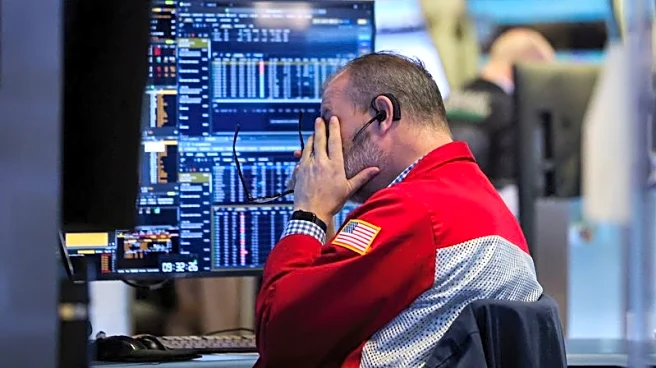
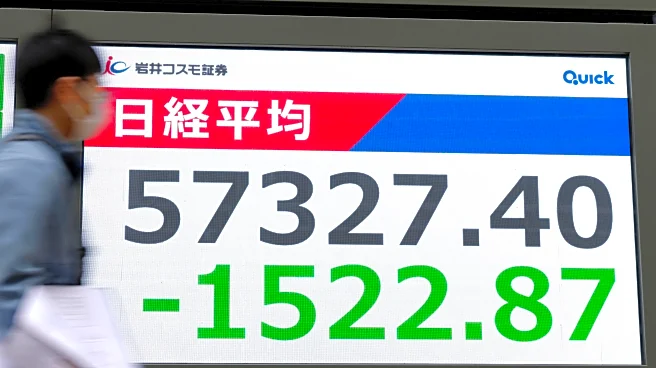
of Hormuz, a critical passage for oil and natural gas, is at the center of these concerns. The stock market has shown a muted reaction so far, but experts warn of a possible larger disruption if the conflict escalates. The situation adds to the uncertainty and fear surrounding the U.S. economy, with potential impacts on consumer prices and market stability.
Why It's Important?
The ongoing conflict in Iran under President Trump's administration could have significant implications for the U.S. economy. Rising oil prices may lead to increased costs for consumers, affecting everything from gasoline to home heating. This could exacerbate inflation, prompting the Federal Reserve to consider raising interest rates, which would impact borrowing costs for businesses and consumers. The uncertainty surrounding the conflict also poses risks to investor confidence and market stability. A prolonged or intensified conflict could lead to broader economic disruptions, affecting various sectors and potentially leading to a recession.
What's Next?
If the conflict in Iran continues or escalates, the U.S. may face further economic challenges. Policymakers and financial institutions will need to monitor the situation closely and prepare for potential market volatility. The Federal Reserve may have to adjust its monetary policy in response to rising inflation and interest rates. Additionally, the U.S. government may need to consider diplomatic or military strategies to de-escalate the situation and stabilize the region. The outcome of these decisions will have lasting impacts on the U.S. economy and its global standing.