







What's Happening?
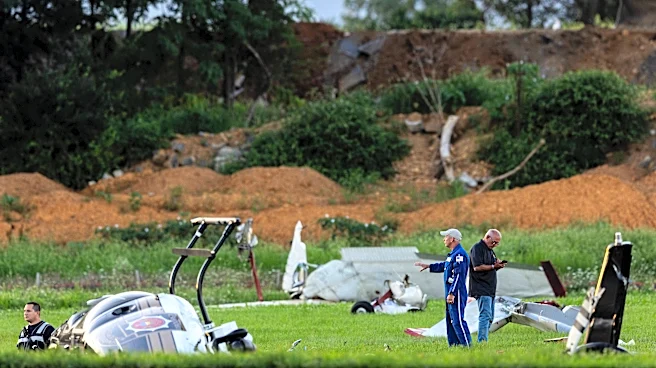
A pilot has died and two Pennsylvania State Troopers sustained injuries following a collision between a small plane and a state police helicopter at Carlisle Airport. The incident occurred on Wednesday evening, with officials reporting that a Cessna 150
airplane unexpectedly veered into a Bell 407 helicopter. Governor Josh Shapiro confirmed that the troopers, identified as Corporal Bryce Corman and Trooper Jason Mills, are expected to recover due to the medical care received at Penn State Hershey Medical Center. The pilot of the Cessna was the sole occupant of that aircraft. The helicopter crew was conducting routine training exercises and was on the ground after training when the Cessna struck it from the rear. The impact caused the helicopter to roll over, losing its blade and tail. Cpl. Corman assisted Tpr. Mills in escaping the wreckage through a window. One trooper is anticipated to be discharged soon, while the other is undergoing further tests. The Carlisle Airport does not have an air traffic control tower, relying on radio communication between pilots.
Why It's Important?
This incident highlights critical safety concerns regarding air traffic management at uncontrolled airports and the potential risks associated with routine training operations. The involvement of a state police helicopter underscores the dangers faced by law enforcement personnel during their duties, even during training exercises. The quick response and self-rescue efforts of the troopers, particularly Cpl. Corman's actions in assisting his injured colleague, demonstrate the resilience and training of emergency services. The ongoing investigations by the FAA and the National Transportation Safety Board (NTSB) are crucial for identifying the cause of the collision and implementing measures to prevent similar occurrences. The findings could lead to revised safety protocols for uncontrolled airfields and for flight operations involving state assets, potentially impacting aviation regulations and training standards across the U.S. The incident also brings attention to the medical response capabilities for severe trauma, as highlighted by the care provided at Penn State Hershey Medical Center.
What's Next?
The Federal Aviation Administration (FAA) and the National Transportation Safety Board (NTSB) are continuing their investigation into the collision. The NTSB plans to document the wreckage thoroughly before moving it to a secure facility for further examination. A preliminary report detailing the accident is expected to be released within the next day. This report will provide initial findings and insights into the circumstances leading to the crash. Further updates are anticipated as the investigation progresses, with CBS 21 committed to providing more information as it becomes available. The findings from the NTSB's full investigation could lead to recommendations for changes in aviation safety procedures, particularly for operations at uncontrolled airports and for state-owned aircraft. These recommendations might influence pilot training, communication protocols, and ground operations at similar facilities nationwide, potentially impacting the broader aviation community and state law enforcement agencies.
Beyond the Headlines
The tragic collision at Carlisle Airport raises deeper questions about the inherent risks in aviation, even for experienced pilots and well-trained law enforcement personnel. The absence of an air traffic control tower at Carlisle Airport, relying instead on pilot-to-pilot radio communication, underscores a common operational model at many smaller airfields across the U.S. This incident may prompt a re-evaluation of the safety protocols and communication requirements at such uncontrolled airports, potentially leading to calls for enhanced technological solutions or stricter procedural guidelines to mitigate risks. Furthermore, the event highlights the psychological and physical toll on first responders and their families, as well as the broader community impacted by such accidents. The investigation's findings will not only address the immediate cause but could also contribute to a wider discourse on aviation safety culture, the adequacy of current regulations for diverse flight operations, and the continuous need for vigilance and adaptation in air travel safety.