

What's Happening?
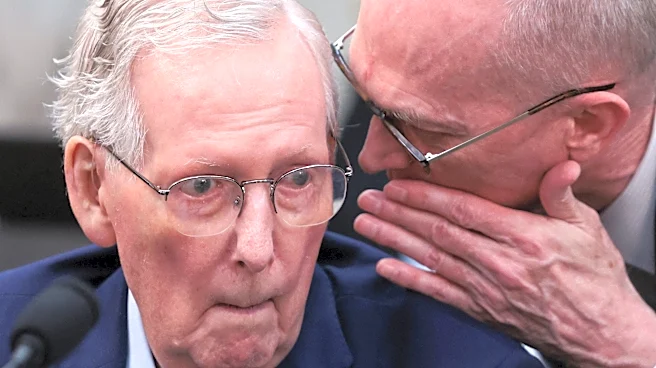
Senator Mitch McConnell has returned to the U.S. Senate after a three-month absence due to a fall in June and subsequent pneumonia. His return has been marked by public scrutiny regarding his health and cognitive abilities. During a Senate Agriculture
Committee meeting on the Farm Bill, McConnell was observed with a vacant expression and open mouth. He initially appeared to misunderstand how to vote, siding with Democrats, before being prompted by fellow Senators John Hoeven and John Boozman to vote 'aye.' Senator Amy Klobuchar also reportedly nodded encouragingly during this interaction. Despite these concerns, McConnell ultimately voted in favor of the Farm Bill, which advanced out of committee with a 12-11 party-line vote. His office later released a statement attributed to him, expressing pride in supporting the bill for Kentucky's farmers.
Why It's Important?
The public incidents surrounding Senator McConnell's return raise significant questions about the fitness of aging lawmakers to serve in Congress. As a long-serving party leader, McConnell's capacity to perform his duties is critical for legislative processes and the stability of Senate leadership. The need for fellow senators to guide his vote on a key piece of legislation like the Farm Bill highlights potential challenges in governance when leaders face health issues. This situation echoes past concerns about other aging senators, drawing attention to broader discussions about age, health, and accountability in public office. The ability of senators to independently and effectively participate in legislative decisions is fundamental to the democratic process, and any perceived impairment can erode public trust and create uncertainty in policy-making.
What's Next?
Kentucky Governor Andy Beshear has called for continued monitoring of Senator McConnell's condition to ensure he can fulfill his duties for the remainder of his term, which concludes in January. McConnell has stated his intention to serve out his term and is undergoing physical therapy. The incident has also fueled social media commentary, including AI-generated memes, further amplifying public discussion about his health. While McConnell's office maintains his commitment to Senate business, the ongoing scrutiny suggests that his health will remain a prominent topic. The situation may intensify calls for greater transparency regarding the health of public officials and could influence future debates about term limits or mandatory cognitive assessments for elderly lawmakers.
Beyond the Headlines
The events surrounding Senator McConnell's return delve into deeper societal and political implications concerning the aging demographic within U.S. leadership. The public display of his apparent cognitive struggles, even if momentary, brings to the forefront ethical considerations about a lawmaker's ability to effectively represent constituents and make critical decisions. This situation could reignite debates about the appropriate age for holding public office and the mechanisms, if any, for assessing the mental and physical fitness of elected officials. It also highlights the delicate balance between respecting a public servant's tenure and ensuring robust, independent governance. The incident may contribute to a broader cultural conversation about ageism versus competence in leadership roles, potentially influencing voter perceptions and future electoral dynamics.