
What's Happening?
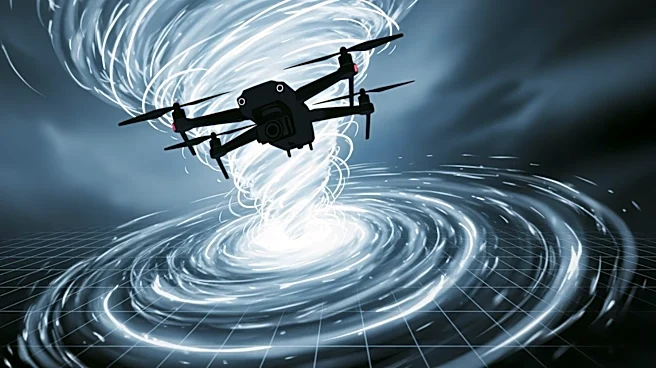
The National Oceanic and Atmospheric Administration (NOAA) has integrated data from Black Swift Technologies' S0 Unmanned Aircraft System (UAS) into its Hurricane Analysis and Forecast System (HAFS). This
integration aims to improve the accuracy of hurricane and tropical storm forecasts. The S0 UAS is designed to operate within the marine boundary layer, collecting atmospheric and ocean-surface data from storm regions that are challenging to access with crewed aircraft or satellites. Operating autonomously at low altitudes, the platform measures various environmental parameters such as pressure, temperature, humidity, wind vectors, and sea surface temperatures. According to Black Swift Technologies, the integration has resulted in a 25% improvement in tropical storm forecasting and a 10% enhancement in hurricane forecast accuracy.
Why It's Important?
The integration of S0 UAS data into NOAA's forecasting system represents a significant advancement in meteorological science, particularly in the realm of hurricane prediction. Accurate forecasting is crucial for preparing and mitigating the impacts of hurricanes, which can cause extensive damage to infrastructure and pose significant risks to human life. By improving forecast accuracy, NOAA can provide more reliable information to emergency services and the public, potentially reducing the economic and human costs associated with these natural disasters. The enhanced data collection capabilities also support longer-duration autonomous operations within storms, allowing for more comprehensive analysis and understanding of hurricane dynamics.
What's Next?
Following the successful integration, NOAA and Black Swift Technologies may continue to refine and expand the use of unmanned systems in meteorological research. Future developments could include the deployment of additional UAS platforms to cover more extensive areas and gather more diverse data sets. This could lead to further improvements in forecasting models and methodologies. Additionally, the collaboration between NOAA and Black Swift Technologies might inspire other partnerships aimed at leveraging advanced technologies for environmental monitoring and disaster preparedness.
Beyond the Headlines
The use of unmanned aircraft systems in hurricane forecasting highlights the growing role of technology in environmental science. It raises questions about the ethical and logistical considerations of deploying autonomous systems in extreme weather conditions. Moreover, the success of this integration could influence policy decisions regarding investment in technological innovations for climate research and disaster management. As climate change continues to affect weather patterns, the need for accurate forecasting tools becomes increasingly critical.