






What's Happening?
The FBI has decided to consolidate its Norfolk Field Office under the Richmond Field Office, effectively downgrading Norfolk to a 'resident agency' starting October 1. This plan, which was previously considered in 2013 for financial and efficiency reasons,
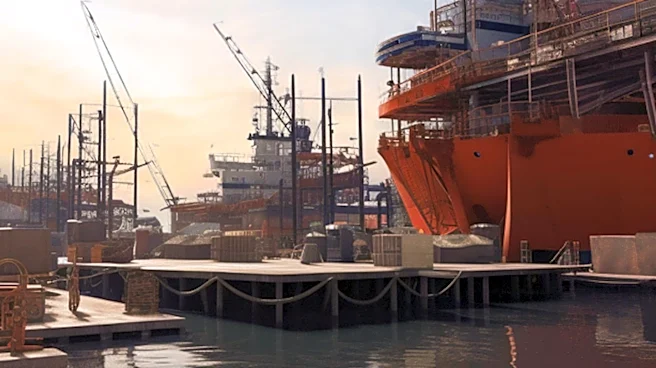
is being implemented without prior consultation with Virginia's congressional leadership. Former leaders of the Norfolk Field Office, including Larry Torrence, Michael Paul, John Adams, Martin Culbreth, and Brian Dugan, have voiced strong opposition, citing significant national security risks. They argue that the Hampton Roads area, where Norfolk is located, is the largest metropolitan statistical area in Virginia and hosts critical national defense assets, including the world's largest naval complex, NATO's only strategic command headquarters in North America, and a nuclear aircraft carrier shipbuilder. The region also has a documented history of persistent foreign intelligence targeting. The consolidation is seen as a shortsighted decision that could compromise the security of this vital area.
Why It's Important?
The downgrade of the FBI's Norfolk office carries substantial implications for national security and regional safety. Hampton Roads is geographically constrained by water and limited bridge and tunnel crossings, making rapid response from Richmond during a major crisis, such as a terrorist attack or mass casualty event, operationally ineffective. The Norfolk office's local presence is crucial for ensuring a swift response and maintaining a security buffer between the Washington, D.C., and Charlotte field offices. Furthermore, the Norfolk FBI office plays a critical role in interagency coordination, collaborating with NCIS, Air Force OSI, Army CID, Coast Guard Investigative Service, HSI, ATF, and various state and municipal departments. Downgrading its status could diminish the perceived authority and immediacy of these national security relationships, potentially creating a dangerous security gap along the mid-Atlantic coast. The region's extensive military installations and defense contractors require a robust and independent FBI presence to protect key existing and emerging national defense assets.
What's Next?
The former special agents in charge of the Norfolk FBI Field Office are urging Virginia's congressional delegation to intervene and halt the October 1 consolidation. They are calling for thoughtful answers regarding the decision-making process, especially given the lack of consultation with affected U.S. senators and local congressional representatives. The Commerce, Justice, Science, and Related Agencies Appropriations Act, Section 505(a), mandates that the FBI notify the House and Senate Appropriations Committees of such proposed consolidations. The current situation suggests a potential bypass of this due process. The outcome will likely depend on the response from congressional leaders and whether they can successfully challenge the FBI's unilateral decision. If the consolidation proceeds, it could lead to a reassessment of security protocols and interagency cooperation in the Hampton Roads area, potentially impacting the effectiveness of law enforcement and intelligence operations.
Beyond the Headlines
The controversy surrounding the FBI Norfolk office downgrade highlights a broader tension between administrative efficiency and operational effectiveness in national security. While the FBI may cite financial savings and streamlined operations as justifications, critics argue that such decisions must prioritize the unique strategic importance of specific regions. The Hampton Roads area's concentration of military and intelligence assets makes it a prime target for foreign intelligence activities, necessitating a robust and autonomous FBI presence. The downgrade could also have a ripple effect on local law enforcement and community trust, as a diminished FBI presence might be perceived as a reduction in federal commitment to regional security. This situation underscores the complex interplay between federal agency restructuring, regional security needs, and political oversight, raising questions about how critical national security decisions are made and communicated to affected stakeholders.