






What's Happening?
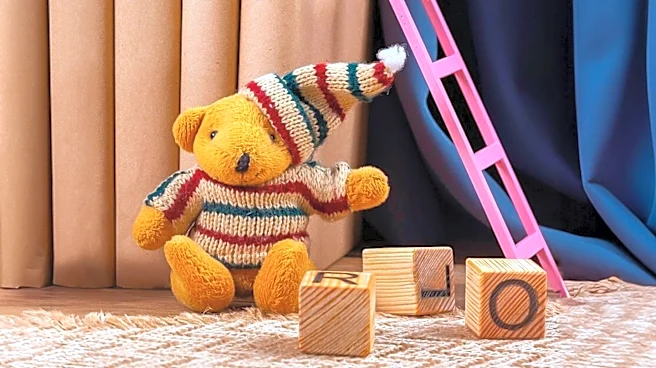
The British Embassy has issued a statement denying reports that the United Kingdom is campaigning for the return of the original Winnie-the-Pooh and friends stuffed animals from the New York Public Library (NYPL). This denial comes after an article suggested
that Gyles Brandreth, an author and friend of A.A. Milne's son Christopher, acted as an emissary for Queen Camilla in 2024, attempting to arrange a temporary return of the toys to Buckingham Palace for the 100th anniversary of the book. The NYPL reportedly denied this request due to the toys' age and fragility, as well as their popularity as an attraction. Manhattan Boro President Brad Hoylman also publicly stated that the toys, which have been on display at the NYPL since 1987, belong to the people of New York and will remain there. Queen Camilla recently visited the NYPL in April, presenting a Roo doll to the collection and reading 'Winnie-the-Pooh' to children.
Why It's Important?
This situation highlights the cultural significance of beloved literary characters and their physical representations, particularly when they become symbols of national heritage. The debate, though framed as a 'friendly back-and-forth,' underscores the emotional attachment and proprietary feelings nations can develop over such artifacts. For the U.S., the Winnie-the-Pooh collection at the NYPL represents a cherished part of its cultural landscape, attracting thousands of visitors annually and serving as a cornerstone of its children's literature collection. The public statements from U.S. officials, including the Manhattan Boro President, emphasize a strong desire to retain these cultural treasures, reflecting a broader sentiment about preserving historical and literary artifacts within their current custodial institutions. The incident also demonstrates how even seemingly lighthearted cultural discussions can involve diplomatic entities like the British Embassy, indicating the perceived importance of such matters on an international stage.
What's Next?
While the British Embassy has denied an official campaign for the return of Winnie-the-Pooh, the underlying sentiment of British attachment to the character, which was originally purchased in London, is likely to persist. The NYPL will continue to house and display the collection, which includes the newly donated Roo doll from Queen Camilla, until at least November 30 as part of its 'Silly Old Bear! Winnie-the-Pooh at 100' display. Future discussions or informal requests for temporary exhibitions in the UK might arise, especially given the ongoing celebrations of the book's centenary. However, the NYPL's stance on the fragility and popularity of the toys suggests that any such arrangements would require careful consideration and likely extensive logistical planning. The public's engagement with this story, as evidenced by the reactions from U.S. officials, indicates that any future attempts to relocate the toys, even temporarily, would likely face significant public and institutional scrutiny.
Beyond the Headlines
The 'Winnie-the-Pooh' debate touches upon deeper themes of cultural ownership, national identity, and the role of museums and libraries as custodians of global heritage. While the toys originated in the UK, their long-standing presence and integration into American culture through the NYPL have created a dual sense of belonging. This scenario raises questions about whether cultural artifacts should remain in their place of origin or where they have found a significant second home and audience. The discussion also subtly highlights the evolving nature of diplomatic relations, where cultural exchanges and even disputes over fictional characters can become subjects of official statements. Furthermore, the story underscores the enduring power of children's literature to transcend borders and generations, fostering a universal connection that can, at times, lead to good-natured international 'incidents' over beloved characters.