








What's Happening?
The Congressional Budget Office (CBO) has reported that the U.S. federal deficit for fiscal year 2026 has reached $1.373 trillion through June, marking a $35 billion increase from the previous year. This rise is attributed to a significant increase in federal spending,
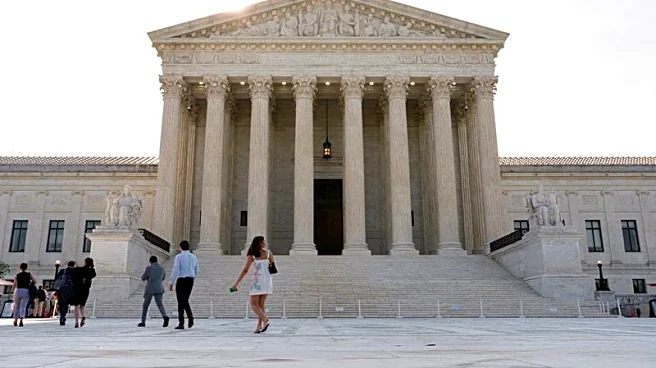
which grew by $178 billion, while tax receipts rose by $142 billion. The increase in spending is largely due to the costs associated with servicing the national debt, which now exceeds $39 trillion, and rising expenses for Social Security, Medicare, and Medicaid. Additionally, customs duties, including tariffs, increased by $55 billion due to executive actions by President Trump, although a Supreme Court ruling in February led to tariff refunds that reduced revenues by $70 billion.
Why It's Important?
The growing federal deficit highlights the challenges facing U.S. fiscal policy, particularly in managing national debt and mandatory spending programs. The increase in spending on interest payments and social programs underscores the need for sustainable fiscal strategies. The deficit's growth, despite a strong economy and low unemployment, suggests potential vulnerabilities in the U.S. economic framework. If unchecked, the rising deficit could lead to higher borrowing costs and limit the government's ability to respond to future economic downturns. The situation calls for policymakers to address entitlement reforms and consider revenue-enhancing measures to stabilize the fiscal outlook.
What's Next?
The CBO's report suggests that the federal government may need to borrow $2 trillion or more by the end of the fiscal year. This projection raises concerns about the long-term sustainability of U.S. fiscal policy. Policymakers may face pressure to implement reforms in entitlement programs and reconsider tax policies to curb the deficit. The ongoing debate over fiscal responsibility is likely to intensify, with potential implications for future budget negotiations and economic policy decisions. Stakeholders, including lawmakers and economic analysts, will be closely monitoring the situation to assess the impact on the U.S. economy and financial markets.