
What's Happening?
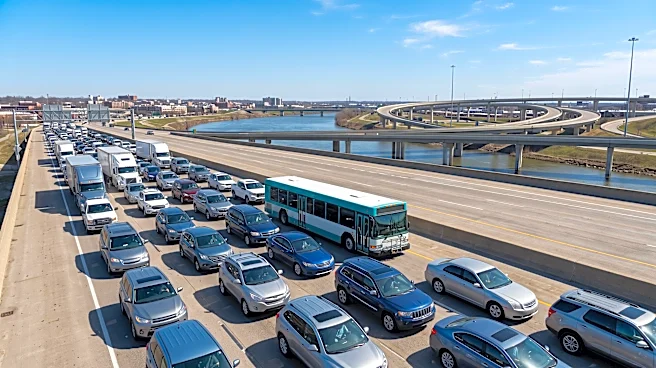
A multi-vehicle crash, which included an EMBARK bus, caused significant traffic delays on Interstate 44 in southwest Oklahoma City on Wednesday morning. The incident occurred on eastbound I-44, near the
I-40 interchange and the Oklahoma River. Sky 5 aerial footage indicated that as many as eight vehicles were involved in the collision. The crash resulted in traffic backing up past Interstate 240 and extending to approximately Southwest 89th Street. Despite the number of vehicles involved and the substantial traffic disruption, authorities have reported that the incident was a non-injury crash. As of 9:10 a.m. Wednesday, the scene was beginning to clear, and traffic flow was expected to gradually return to normal.
Why It's Important?
This incident highlights the significant impact that even non-injury multi-vehicle crashes can have on urban infrastructure and daily commutes. The involvement of an EMBARK bus underscores the potential for public transportation disruptions, affecting numerous passengers and their schedules. Major traffic backups, as experienced on I-44, lead to lost productivity, increased fuel consumption, and heightened stress for commuters. While no injuries were reported, such events always carry the risk of severe consequences, emphasizing the importance of road safety and driver vigilance. For Oklahoma City, frequent traffic incidents on key interstates like I-44 can prompt discussions about traffic management strategies, road maintenance, and public awareness campaigns to reduce accidents and improve traffic flow.
What's Next?
Following the clearing of the crash scene, authorities will likely conduct a detailed investigation to determine the exact cause of the multi-vehicle collision. This may involve examining vehicle damage, interviewing drivers and witnesses, and reviewing any available traffic camera footage. While no injuries were reported, insurance claims and potential liability discussions among the involved parties will likely follow. The EMBARK bus involved will undergo inspection and repairs, and the transit authority may review its safety protocols. For commuters, the immediate impact will be the gradual return to normal traffic conditions, but the incident serves as a reminder of the unpredictability of road travel and the need for alternative routes or public transportation options during such events.
Beyond the Headlines
Beyond the immediate traffic disruption, this multi-vehicle crash touches upon broader themes of urban planning, public transportation reliability, and driver behavior. The frequent occurrence of such incidents on major interstates like I-44 points to the challenges of managing high-volume traffic in growing metropolitan areas. It raises questions about the adequacy of current road infrastructure to handle increasing vehicle loads and the effectiveness of existing traffic control measures. Furthermore, the incident subtly highlights the collective responsibility of drivers to maintain safe distances, adhere to speed limits, and remain attentive to prevent chain-reaction collisions. The resilience of public transportation systems, like EMBARK, in recovering from such disruptions is also a key aspect, as they are vital for urban mobility and reducing individual vehicle reliance.